There’s a question that keeps coming up from business owners right now: “My business has good reviews so why isn’t ChatGPT or Google AI recommending me?”
The answer is almost always the same. They’re thinking about reviews the wrong way.
A star rating is the surface. What AI systems actually care about is what lives underneath the language, the patterns, the recency, the volume, and how the business responds. In 2026, understanding this distinction is the difference between being mentioned in AI-generated answers and being invisible.
Let me walk you through what’s really happening.
AI Doesn’t Read Stars It Reads Words
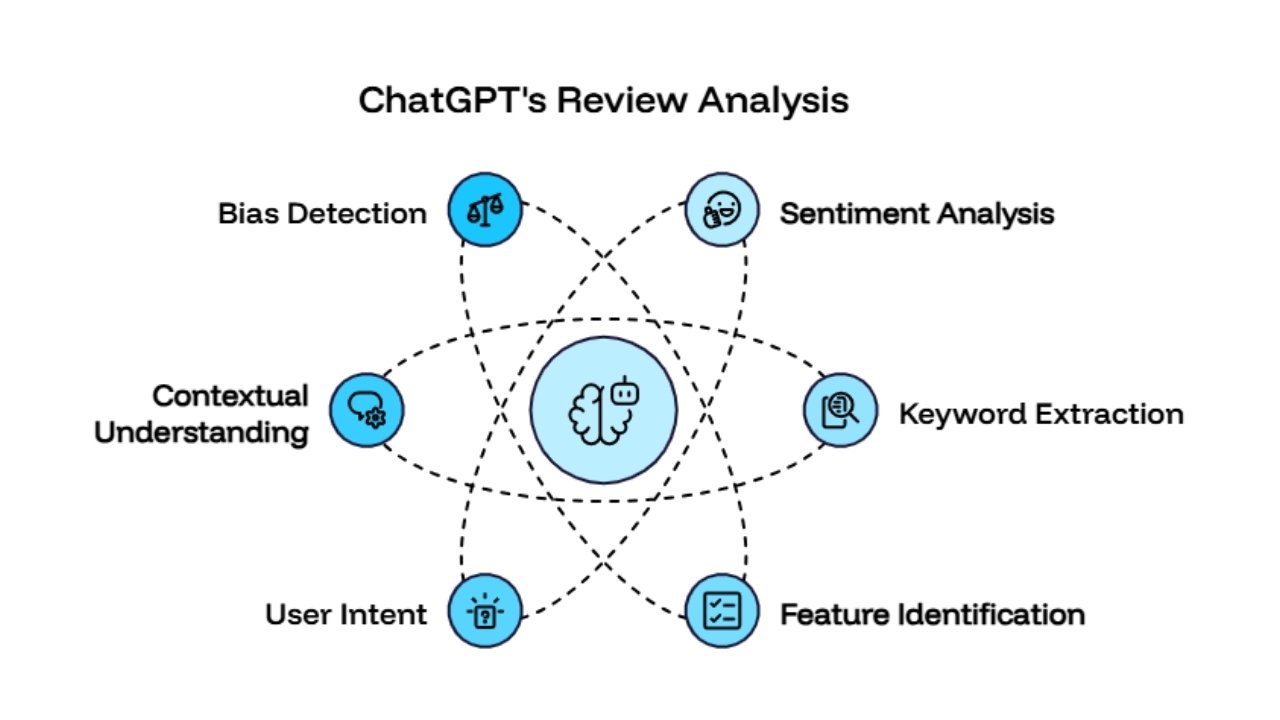
When ChatGPT or Google’s AI Overview processes reviews about a business, it’s doing something much more sophisticated than averaging star ratings. It’s reading the actual text and extracting meaning from it.
Think about how a person reads reviews before choosing a dentist or a restaurant. They don’t just look at the stars. They scan through what people wrote. They’re looking for recurring themes. Is the waiting time always mentioned? Do multiple people say the staff is rude? Does everyone bring up how clean the place is?
AI does the same thing, at scale and with more precision.
If your reviews frequently contain phrases like “they explained everything,” “the procedure was painless,” “the team remembered my name from my last visit,” or “I actually felt calm in the waiting room,” the AI builds a detailed picture of your business. It starts associating your name with concepts like patient comfort, clear communication, and attentive staff.
When someone then asks ChatGPT “which dental clinic in my area is good for anxious patients,” your clinic gets surfaced not because of your star rating, but because the language in your reviews maps directly to what that person is asking.
This is why review quality matters at least as much as review quantity.
The Three Things AI Extracts From Your Reviews
1. Semantic Themes
AI language models are trained to understand topics and concepts, not just keywords. When it reads through your reviews, it’s identifying what your business is actually known for. Are you known for being affordable? For specializing in children? For being conveniently located near a transit hub? For having a particularly skilled surgeon?
These themes become part of your digital identity. And they directly influence when and why you get recommended.
This is why a generic five-star review that just says “great place, highly recommended” actually contributes very little. It confirms sentiment but adds nothing specific. The reviews that help you most are the ones where patients or customers describe a concrete experience.
2. Sentiment Patterns and Consistency
AI doesn’t just read what people say it evaluates how consistent the sentiment is and whether there are contradictions. A business with two hundred five-star reviews and a handful of three-star reviews mentioning “long wait times” will have that negative theme noted.
More importantly, if the same complaint shows up repeatedly across reviews even in otherwise positive ones AI registers it as a real characteristic of the business, not a one-off bad day.
This means you need to actually read your reviews regularly and look for patterns. If three different people in the last month mentioned that your phone line is hard to get through, that’s not just a complaint. It’s a signal that AI is picking up and possibly using to nuance its recommendations.
3. Recency and Velocity
Older reviews carry less weight. A business that had fifty glowing reviews three years ago but has collected almost nothing since then looks stagnant. AI systems interpret low recent review activity as a sign that the business may have declined in quality or is simply not as active.
The pattern that works best is a steady, consistent stream of reviews, not a burst of twenty in one week, then nothing for six months. That kind of spike can look manipulated and may actually trigger quality filters.
Aim for a natural, ongoing flow. Even a handful of thoughtful reviews every month is far better than a periodic push.
How Response Behavior Shapes Your AI Profile
Most business owners think of review responses as a courtesy, a way to thank customers or smooth over complaints. In reality, your responses are also content that AI systems read and analyze.
When you reply to a positive review, you have an opportunity to naturally reinforce relevant information about your business. If someone mentions they came in for a dental implant and the procedure went smoothly, your response might thank them and briefly mention your clinic’s commitment to comfortable implant experiences. You’ve now added another layer of topical signal without it feeling forced.
When you respond to a negative review, the stakes are higher. AI systems and potential patients reading those reviews are watching how you handle criticism. A defensive, dismissive, or combative response sends a clear signal about your business culture. A calm, empathetic response that invites the person to call and resolve the issue signals maturity and professionalism.
Here’s what most businesses get wrong: they respond to negative reviews in a way that protects their ego rather than builds trust. But the goal of a review response isn’t to win an argument, it’s to show the next hundred people reading that review how you handle problems.
That’s exactly the kind of behavioral signal AI uses to assess business trustworthiness.
Where AI Pulls Review Data From
ChatGPT and other AI tools don’t just look at Google reviews. They synthesize information from multiple platforms, and the weight they give to each depends on relevance to the query and the domain’s authority.
For most local businesses, the hierarchy looks something like this:
Google Reviews remain the most influential because of Google’s dominance in local search and the tight integration between Google’s AI products and its own review platform. If you could only focus on one platform, this is it.
Industry-specific platforms carry significant weight in their respective domains. For dental clinics, platforms like Practo, Healthgrades, and Zocdoc matter, for restaurants, Yelp and TripAdvisor still count, and for legal services, Avvo. For home services, Angi. Being present and well-reviewed on the platform that’s recognized within your industry signals legitimacy.
Facebook Reviews still contribute, particularly for local businesses with active community engagement. An active Facebook page with real customer interactions adds to your credibility profile.
Third-party mentions in editorial content is often overlooked, but when a local news site, a parenting blog, or a dental health resource mentions your clinic favorably, that carries weight that pure review platforms don’t. This is where content strategy intersects with reputation.
The Review Request Problem Most Businesses Have
Ask almost any business owner how they get reviews and they’ll say “we ask happy customers.” But ask them how often they actually do it, and the answer is usually “not as consistently as we should.”
This is the gap that separates businesses with strong review profiles from those with weak ones.
The clinics and businesses that get recommended by AI are the ones that have built review collections into their regular operations not as a special campaign, but as a standard part of how they interact with customers.
What works in practice:
A brief, natural mention at the end of a positive interaction carries far more weight than a formal email sent three days later. Train your team to say something simple: “If you had a good experience today, we’d really appreciate a Google review. It helps other people find us.” Make it feel like a genuine task, not a script.
Follow-up messages via text or email work well for businesses that collect contact information. A short, personal-sounding message sent within 24 hours of a visit converts at a much higher rate than a generic automated email.
Never incentivize reviews in a way that violates platform terms. Not because you’ll definitely get caught, but because incentivized reviews tend to be generic and generic reviews don’t help your AI visibility profile.
Fake Reviews: The Short-Term Trap
It’s worth addressing this directly because the temptation is real, especially when a competitor seems to have a suspiciously perfect review profile.
Fake reviews may briefly boost your star count, but they actively hurt your AI visibility in two ways.
First, AI systems have gotten very good at detecting patterns that suggest inauthenticity accounts with no review history suddenly leaving reviews, clusters of reviews arriving on the same day, language that sounds templated rather than personal. When these signals fire, your review data gets discounted.
Second, fake reviews don’t contain the specific, experiential language that actually helps with AI recommendations. They’re the kind of reviews that say “excellent service, very professional” which tells an AI nothing useful about what your business actually does well.
The time and energy spent on fake reviews is almost always better invested in just asking real patients consistently.
Building a Review Strategy That Compounds
The most powerful thing about a consistent review strategy is that it compounds over time. Each genuine review adds to your semantic profile, each thoughtful response adds to your trustworthiness signals, and each new platform where you’re well-represented adds another source for AI to draw from.
Businesses that started building this seriously two or three years ago are now the ones getting surfaced in AI answers without doing anything special. They built the foundation before it felt urgent.
If you’re reading this and thinking it’s too late to catch up it’s not. AI recommendation systems are still young, and most local businesses haven’t adapted yet. The window to build a strong review foundation before the competition gets serious about it is still open.
Start with your Google presence, build a response habit, and ask every satisfied customer. It’s not complicated. It’s just consistent.
Published on getairanks.com helping local businesses get found in the age of AI search.