Not long ago, ranking on Google meant showing up on page one of the search results. Everyone understood that goal. The rules were known. You optimized your title tags, built backlinks, wrote content around keywords, and watched your position climb.
That world hasn’t disappeared but a parallel world has emerged next to it.
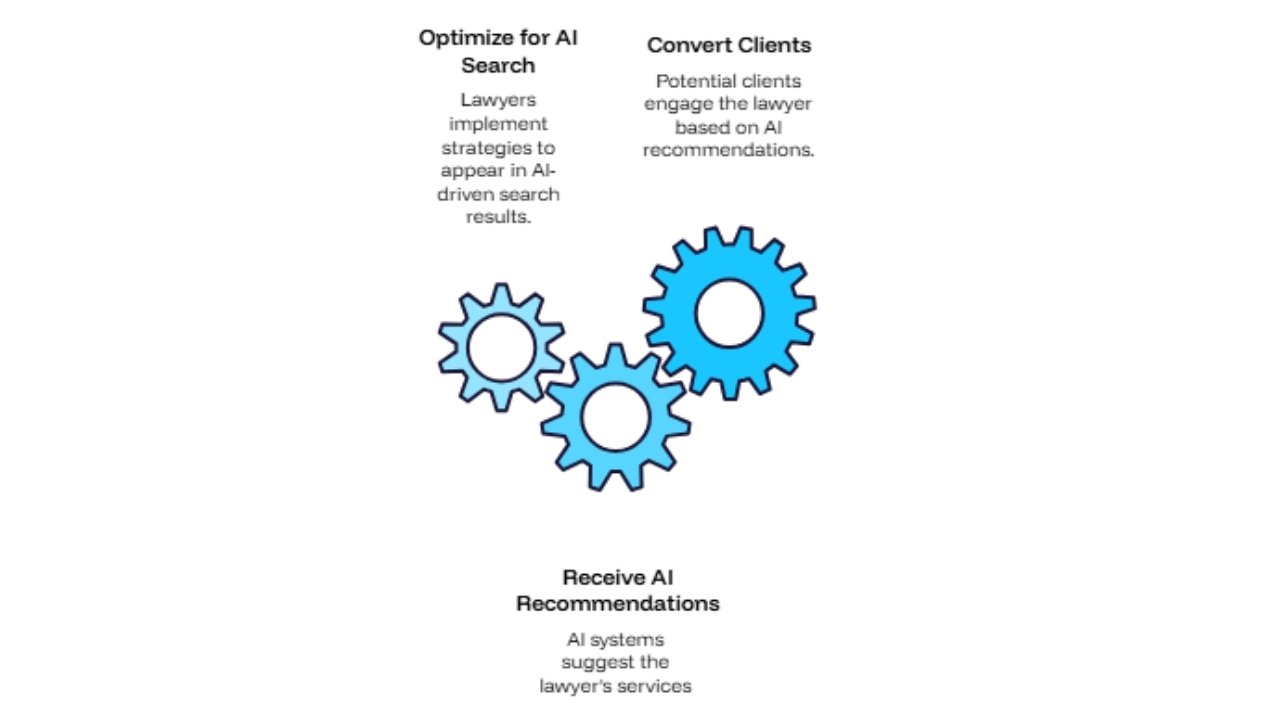
People are now getting their answers from AI. They’re typing questions into ChatGPT, using Google’s AI Overviews, talking to Perplexity, and relying on Gemini. And in these environments, there is no page one. There’s no list of ten blue links. There’s a single composed answer and your business is either in it or it isn’t.
This is what people are starting to call LLM SEO. And while some of the principles overlap with traditional SEO, the mindset shift required is significant.
What Is LLM SEO?
LLM stands for Large Language Model, the technology that powers tools like ChatGPT, Gemini, and Claude. LLM SEO refers to the practice of making your business, your content, and your online presence legible and trustworthy to these AI systems so that when they compose answers for users, your name comes up.
The key difference from traditional SEO: you’re no longer just trying to rank for keywords in a list. You’re trying to become the kind of source that an AI would naturally reference when answering a question in your area of expertise.
Traditional SEO asks: “Can Google find my page?”
LLM SEO asks: “Does the AI know who I am, what I do, and why I should be trusted?”
Why This Matters More Than Most Business Owners Realize
Here’s a scenario that’s playing out every day in 2026.
A parent in Dhaka types into ChatGPT: “Which dental clinic should I take my child to for their first visit? I want somewhere gentle and experienced with kids.”
ChatGPT doesn’t go hunting for a list of dental clinics and rank them by domain authority. It draws on everything it knows from its training data and, increasingly, from real-time web search to compose a helpful answer. If your clinic is mentioned positively across review platforms, has a website that addresses pediatric dental care thoughtfully, and is cited in local health content, you might get a mention. If none of those things exist, you don’t.
The person asking never scrolled through search results. They just asked and got an answer. And the clinics that show up in that answer are winning patient acquisition without even being searched for.
The Foundation: Being Findable Across Multiple Sources
AI language models form their understanding of a business from many places at once. They triangulate. They’re looking for consistent, credible signals across:
- Your own website
- Your Google Business Profile
- Third-party review platforms
- Local directories and citation sources
- Editorial mentions (local news, industry publications, blogs)
- Social media presence
- Q&A content (like Google’s Q&A section, Reddit, or Quora threads)
A business that shows up on only one of these channels is much harder for an AI to confidently recommend than one that appears consistently across many of them.
Think of it like this: if five different people independently told you the same restaurant was excellent, you’d trust that recommendation. If only one person mentioned it, you’d take it with more uncertainty. AI systems work the same way. The more places they find your business mentioned positively, the more confident they become in surfacing you.
Content That AI Systems Actually Use
One of the biggest shifts in LLM SEO is moving from keyword-focused content to question-answering content.
Traditional SEO content was often built around a keyword and then filled out to hit a word count. The question of whether it was actually useful to a reader was secondary to whether it contained the right phrases.
AI systems care deeply about whether content actually answers a question well. They’re trained on human-generated text where quality matters. They can tell the difference between a page that genuinely explains dental implant candidacy and a page that just mentions “dental implants” seventeen times.
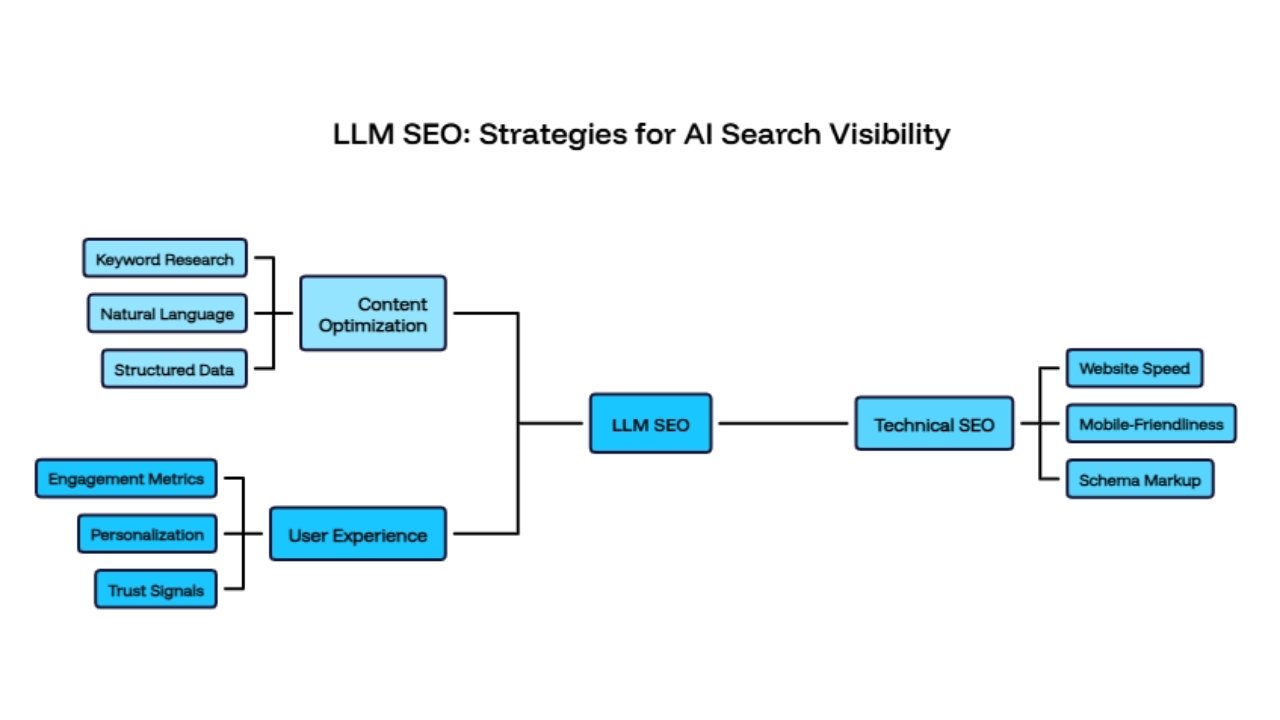
What works for LLM SEO:
Answer specific questions fully. If someone might ask “how painful is a root canal?”, your page on root canal treatment should answer that question directly, honestly, and in plain language. Don’t bury the answer under three paragraphs of background.
Use natural, conversational language. AI tools are calibrated on how humans actually talk and write. Content that sounds robotic, overly formal, or stuffed with jargon performs worse than content written the way a knowledgeable person would explain something to a friend.
Go deep on your area of expertise. A website with fifteen well-developed pages on dental topics signals topical authority. A website with one generic page that mentions “our many dental services” signals nothing.
Write for humans first. This sounds obvious, but many business websites are written for imagined algorithms, not real people. If a patient reads your content and leaves with a clearer understanding of their options, you’ve done it right. That kind of genuine usefulness is what AI systems are trained to recognize.
Structured Data: Giving AI a Direct Line to Your Information
One of the most underused tools in LLM SEO is schema markup code that you add to your website to tell AI systems and search engines exactly what kind of entity you are and what information is relevant.
For a local business, this means marking up your name, address, phone number, hours, and service area using standardized vocabulary. A dental clinic, it means marking up your service types (dental implants, orthodontics, pediatric dentistry) using medical business schema.
For content pages, FAQ schema tells AI systems “this page contains questions and answers” in a machine-readable way making it much easier for them to pull your answer when composing a response to a user’s question.
This isn’t complicated to set up, but it does require someone who knows how to edit your site’s backend or work with a developer. The payoff is that you’re essentially handing AI systems a structured, reliable map of who you are and what you offer.
Your Brand Entity Needs to Exist on the Web
Here’s a concept that’s worth understanding: AI systems think in terms of entities, not just web pages.
An “entity” in this sense is a distinct real-world thing your business, your founder, your clinic, your specialty. For an AI to confidently recommend your business, it needs to have built up enough information about your entity from multiple consistent sources to treat you as a known, verified presence.
This is why brand consistency matters so much. If your business name appears differently across platforms, or your address has changed and the old one is still listed in ten directories, the AI has conflicting information and reduced confidence in your entity.
A few things that strengthen your entity presence:
A Wikipedia or Wikidata page, if your business or founder has achieved enough notability. This is one of the strongest entity signals available, though it requires genuine notability to maintain.
Consistent citations across authoritative directories the same name, address, and phone number everywhere, formatted identically.
Mentions in editorial content: a local news story about your clinic’s community work, a health blog that references your dentist’s expertise, a podcast appearance where your founder discusses their specialty. Each of these adds a thread to the web of entity information that AI systems draw from.
A well-optimized “About” page on your website that tells the story of your business, names your key team members, lists qualifications, and establishes your history. This is often where AI systems look for background information when composing descriptions of a business.
The GSC (Google Search Console) Angle
Even though LLM SEO is partly about AI tools beyond Google, Google’s AI systems still drive a significant portion of the recommendation landscape particularly through AI Overviews in search results and through Gemini.
Google Search Console gives you a view into how Google perceives your website: which queries it’s appearing for, how often it gets clicked, which pages are performing, and where there are technical issues.
For LLM SEO purposes, GSC is useful in a specific way: it tells you whether your content is being surfaced for question-based queries. If you’re not appearing for the “how,” “what,” “why,” and “which” type queries in your category, your content probably isn’t structured in a way that answers questions directly.
Look at your top queries in GSC. Are they mostly navigational (people searching your business name) or are they informational (people asking questions that your content is answering)? If it’s mostly the former, you have room to grow your informational authority which is the exact kind of authority that AI systems look for when composing answers.
Also check your Core Web Vitals and indexing coverage regularly. AI systems trust content from websites that Google has fully crawled and indexed. Technical issues that prevent full indexing can quietly undermine your LLM SEO efforts.
Building Trust at Every Layer
There’s a through-line in everything that makes LLM SEO work: trust.
AI systems are essentially trying to answer the question: “Which sources can I confidently recommend to someone who trusts me?” They’re protecting their own credibility by recommending businesses and content that are genuinely reliable.
That means every signal they evaluate comes back to trustworthiness. Reviews: do real people consistently vouch for this business? Website content: does this appear to be written by someone who actually knows what they’re talking about? Citations: is this business consistently recognized across credible sources? Entity consistency: does this business present itself the same way everywhere, or does it look confused or disorganized?
The businesses getting recommended by AI in 2026 are not the ones who figured out a loophole. They’re the ones who built genuine credibility online, real reviews, real expertise, real consistency over time.
Where to Start If You’re Behind
If you feel like you’re starting from scratch, here’s a practical sequence:
First, audit your current presence. Google your business name and see what comes up across the first two pages. Check your Google Business Profile. Look at your review counts across platforms. Visit your website as if you were a potential customer who knows nothing about you.
Second, fix the basics. Ensure your GBP is complete and accurate. Ensure your NAP information is consistent everywhere. Fix any obvious gaps in your website missing service pages, no team information, no content that answers patient questions.
Third, start building review momentum. Pick one platform (Google) and build a genuine process for consistently collecting reviews from satisfied customers. Make it a habit, not a campaign.
Fourth, invest in content over time. Publish one genuinely useful article per month. Answer a real question your patients or customers ask. Do it well. Repeat.
Fifth, add the technical layer. Schema markup, GSC setup, and site speed improvements can wait until the foundation is solid but don’t leave them forever.
This isn’t a three-month project. It’s an ongoing investment. But the businesses that treat it that way are the ones who quietly build an AI presence that their competitors can’t easily copy.
A Final Thought
LLM SEO is still young. The tools are evolving, the signals are still being mapped, and the best practices are being discovered in real time. That’s actually an advantage for businesses that move now.
In a few years, everyone will understand this. The conversation will be as familiar as “we need to be on page one of Google” was ten years ago. Right now, most businesses in most industries haven’t seriously started.
The businesses that get ahead in AI recommendations are the ones who recognize that this is happening and do something about it before it feels urgent.
Start building. The AI is already paying attention.
Published on getairanks.com helping local businesses get found in the age of AI search.