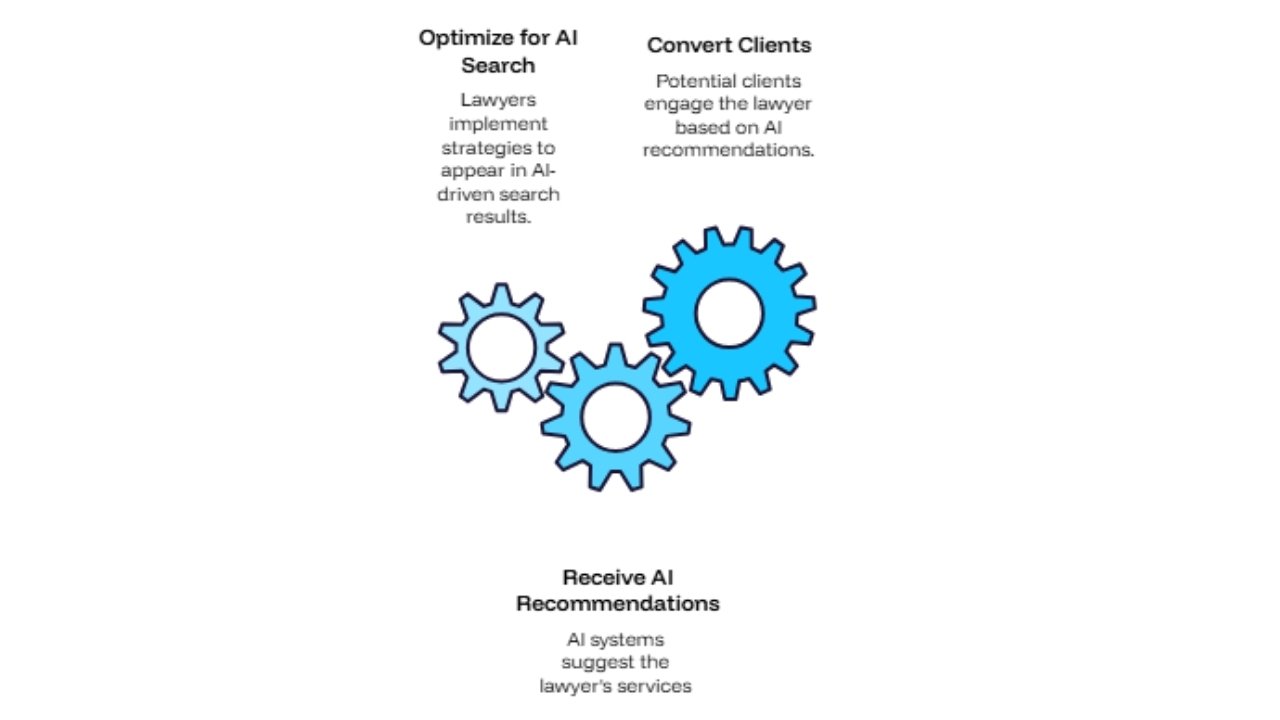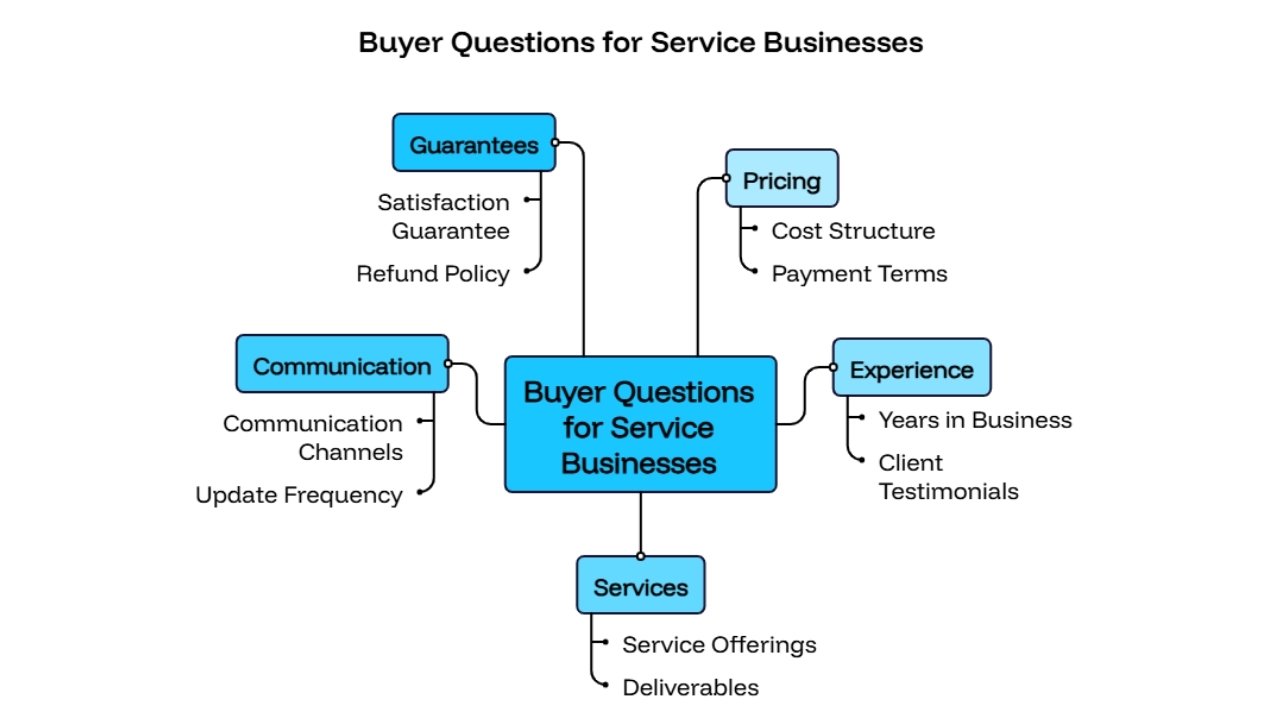
Here’s something a lot of business owners still haven’t noticed: clients are now having a whole conversation with ChatGPT before they ever pick up the phone to call you. By the time they land on your website, they’ve usually already half-decided whether you’re worth contacting. So understanding these questions is really understanding what’s going through a client’s mind right before they hire someone.
The questions below show up again and again across service industries: law, real estate, home services, consulting, all of it.
1. Who’s the best [service] in [location]?
This is the most common one by far. The names AI gives here are usually businesses whose website, reviews, and directory profiles all tell the same story. If your name isn’t coming up, it’s likely because your information is inconsistent somewhere, or you simply aren’t mentioned in enough places.
2. Is this company trustworthy?
People often ask about a specific business by name to verify it. Here, AI looks at the language used in reviews, how long the business has been operating, and whether it’s mentioned elsewhere online. A high rating alone isn’t enough; the actual details inside the reviews are the real signal.
3. What should I ask before hiring someone for this?
Before hiring, people want a checklist. Businesses that already answer these questions on their own website (usually in an FAQ section) get their content pulled directly by AI, because it matches the question almost word for word.
4. [Competitor A] or [Competitor B], which is better?
Comparison questions are extremely common now. AI lines up the public information for both businesses and leans toward whichever one comes across as clearer and more detailed. Vague, generic websites lose here even when the business itself is good.
5. How long does this usually take?
Uncertainty about timelines is one of the biggest sources of anxiety for buyers. Businesses that openly explain their process, what the steps are, and how long each stage typically takes tend to get pulled into answers for this type of question.
6. Are there any hidden costs or conditions?
This question comes from a fear of being misled. A website that explains its process and terms honestly sends a clear signal to AI that the business is transparent.
7. What are people actually saying in the reviews?
People don’t just want a star rating; they want a summary. Here, AI pulls together reviews from multiple platforms Google, Facebook, industry-specific review sites and looks for patterns. Having reviews on just one platform puts you at a disadvantage here.
8. Does this business actually work in [specific area/situation]?
People are checking whether a business is actually the right fit for their exact situation. Websites that clearly spell out their service area or specialization on a dedicated page do better than a generic “we do it all” page.
9. What should I expect from a first conversation with them?
Uncertainty about the first call or meeting keeps a lot of people from reaching out. Content that clearly explains what happens at the start of the process performs well for this kind of question.
10. What else should I know before deciding?
This is a more open-ended question, where AI tries to surface anything important on its own. Whichever business has the most detailed and honestly written content usually gets cited here.
What This Pattern Actually Tells You
Notice that every single one of these questions comes down to the same thing: people are looking for trust, not a price or a deal. What AI is really doing is pushing forward whichever business explains itself the most clearly, honestly, and specifically.
So building an FAQ or knowledge section around these exact questions, and answering each one honestly and specifically, is the most useful thing you can do long-term. Later, in Google Search Console, you’ll see exactly this kind of question-based query start pulling in more impressions and clicks because you’re now answering in the same language people (and AI) are actually asking in.