The way Australian consumers discover and choose local businesses has changed dramatically. Understanding how customers find local businesses using AI is no longer a topic for large corporations; it is an urgent, practical concern for every small and medium-sized business operating in Australia today. From asking ChatGPT to recommend a plumber in Melbourne to using Google Gemini to find the best cafe near Parramatta, AI-driven search is reshaping the local discovery landscape at speed.
If your business is not visible inside these AI systems, you are already losing customers to competitors who are. This article breaks down the mechanics of AI-driven local search, explains what signals AI platforms rely on, and shows you exactly what steps to take to ensure your business gets recommended.
The Shift From Traditional Search to AI-Driven Discovery
Traditional search engines worked on a simple principle: a user types a keyword, and a list of ranked website links appears. That model is rapidly being supplemented and, in many cases, replaced by conversational AI interfaces that deliver direct answers.
Platforms such as ChatGPT, Google Gemini, Microsoft Copilot, and Perplexity AI now handle millions of local business queries every single day. When a user asks, “What is the best physiotherapist in Brisbane?”, the AI does not return ten blue links. It recommends one, two, or three businesses by name and explains why. The businesses it does not know about simply do not exist in that moment.
According to IBM’s research on AI in search, AI-powered tools are progressively replacing conventional keyword-based queries for informational and transactional intent. For local business searches specifically, the stakes are particularly high because a single AI recommendation can directly drive a phone call, a booking, or a store visit.
How Customers Find Local Businesses Using AI: The Core Mechanics
To understand how customers find local businesses using AI, you need to understand how AI platforms gather and evaluate business information. These systems do not crawl your website in real time. They rely on a combination of pre-trained data, structured web sources, and retrieval-augmented generation (RAG) to form their answers.
The primary data sources AI tools use include:
- Google Business Profile listings (one of the most heavily weighted signals)
- Online review platforms such as Google Reviews, Yelp, and TrueLocal
- Business directory listings, including Yellow Pages, SEEK, and industry-specific directories
- Your business website’s content, structure, and schema markup
- Social media profiles, especially those with consistent name, address, and phone (NAP) details
- Third-party editorial content and backlinks from reputable Australian websites
When an AI assembles a recommendation, it cross-references these signals to determine which business is most relevant, most trusted, and most likely to serve the customer well. Businesses that maintain consistent, accurate, and comprehensive information across all of these sources are significantly more likely to be surfaced.
Why How Customers Find Local Businesses Using AI Matters for Australian Operators
Australia has one of the highest rates of smartphone and internet usage in the Asia-Pacific region. A 2024 report from the Australian Communications and Media Authority (ACMA) found that over 88% of Australians use the internet daily, with mobile usage continuing to grow. This high connectivity means Australian consumers are actively using AI tools to shortcut their research process.
Local search queries “near me”, “best in [suburb]”, and “open now” have always been high-intent. But when these queries are processed by an AI assistant rather than a traditional search engine, the results are far more selective. Traditional search might display ten results. An AI assistant might name only one or two. This winner-takes-most dynamic makes AI visibility critically important for any local business.
For a practical deep-dive into where your business stands in AI search today, you can access a comprehensive AI visibility analysis that shows exactly how AI platforms perceive and represent your business right now.
Key Signals That Influence How Customers Find Local Businesses Using AI
Optimising for AI discovery is different from traditional SEO, although many of the foundations overlap. Below are the most important signals that determine whether an AI platform recommends your business.
1. Google Business Profile Completeness and Accuracy
Your Google Business Profile (GBP) is one of the most frequently cited data sources for AI-powered local recommendations. Ensure your profile includes your correct business name, address, phone number, operating hours, website, business category, and a thorough description that includes relevant keywords. Businesses with complete GBP listings are far more likely to be accurately surfaced in AI responses.
2. Volume and Quality of Reviews
AI platforms treat review data as a strong proxy for trustworthiness and customer satisfaction. A business with 200 four-star reviews and consistent positive sentiment is dramatically more likely to be recommended than a competitor with 12 reviews and mixed feedback. Actively encouraging satisfied customers to leave detailed reviews — across Google, Facebook, and industry platforms directly improves your AI ranking potential.
3. NAP Consistency Across Directories
Name, Address, and Phone consistency (NAP) is a foundational local SEO signal that AI platforms also rely upon. When your business details are identical across your website, Google Business Profile, Facebook Page, Yellow Pages, and other directories, AI tools can confidently verify your identity and location. Inconsistencies create doubt and reduce your chances of being recommended.
4. Website Content and Schema Markup
Your website’s content quality matters enormously. Pages should clearly describe what your business does, who it serves, and where it is located. Implementing LocalBusiness schema markup structured data that explicitly labels your business type, location, services, and contact information helps AI systems interpret your site accurately. Schema markup is not visible to users but is highly readable by AI models and search engines alike.
5. Authority and Editorial Coverage
When reputable third-party websites reference your business, local news outlets, industry publications, government business registers, or well-known blogs, AI platforms register this as a signal of authority. Building genuine digital PR and earning backlinks from credible Australian sources strengthens your profile in AI-driven discovery systems.
The Role of Conversational Optimisation in AI Search
Traditional keyword SEO focused on short search terms. AI search is conversational. A customer does not type “cafe Sydney”; they ask, “What is a good cafe in Surry Hills that is family-friendly and has good coffee?” Your content needs to answer these kinds of natural language questions.
This is where FAQ pages, detailed service pages, and blog content become strategically powerful. Each piece of content that answers a real question your customers ask increases the probability that an AI system will draw from your website when composing a local recommendation. This approach, sometimes called Answer Engine Optimisation (AEO), is quickly becoming as important as traditional SEO.
According to Moz’s Local SEO research, businesses that optimise for conversational query patterns see measurably higher engagement from both traditional search and emerging AI-driven discovery platforms. The investment in content quality pays dividends across multiple channels simultaneously.
Practical Steps Australian Businesses Must Take Today
Here is a prioritised action plan for improving how customers find local businesses using AI:
- Audit and fully complete your Google Business Profile leave no field blank.
- Conduct an NAP audit across all directories and correct any inconsistencies.
- Implement LocalBusiness schema markup on your website’s homepage and key service pages.
- Build a proactive review generation system, email, SMS, or in-person prompts to satisfied customers.
- Create content that answers the specific questions your customers ask in natural language.
- Seek editorial coverage in local and industry publications to build third-party authority.
- Regularly test how AI tools respond when asked about businesses in your category and location.
To measure your current AI search performance and identify exactly where the gaps are, run an AI ranking audit through Get AI Ranks. The audit reveals which AI platforms are referencing your business, what they are saying about it, and what steps will improve your position.
Data-Driven Insights: What the Numbers Tell Us About AI Local Search
The following statistics illustrate the scale of the shift toward AI-driven local business discovery:
- ChatGPT surpassed 100 million weekly active users by early 2024 and continues to grow, with a significant portion of queries being local or transactional in nature.
- Google’s AI Overviews (formerly Search Generative Experience) appeared in over 84% of tested searches by late 2024, fundamentally changing how local results are displayed.
- Businesses with complete Google Business Profiles receive, on average, 7 times more clicks than those with incomplete listings.
- Research published via Search Engine Land confirms that businesses with strong structured data and review profiles are significantly more likely to appear in AI-generated local search summaries.
How Customers Find Local Businesses Using AI: A Step-by-Step Scenario
To make this concrete, consider the following scenario. A customer in Sydney is looking for a trusted electrician. They open ChatGPT and type: “Who are the best-reviewed electricians in Chatswood, Sydney?”
The AI does the following:
- Queries its training data and any real-time retrieval tools available to it.
- Identifies businesses listed in Google Business Profile data, review platforms, and web directories that match “electrician” and “Chatswood”.
- Filters by review volume, average rating, and the recency of those reviews.
- Considers which businesses have clear, structured website content and schema data confirming their service area.
- Returns a recommendation with a brief explanation of why each business was selected.
If your electrician business in Chatswood does not appear in this process, it is not because you are not good at your job. It is because your digital footprint has not been optimised for how customers find local businesses using AI. The good news is that this is entirely fixable with the right strategy and consistent execution.
AI Recommendation Optimisation: Building Long-Term Visibility
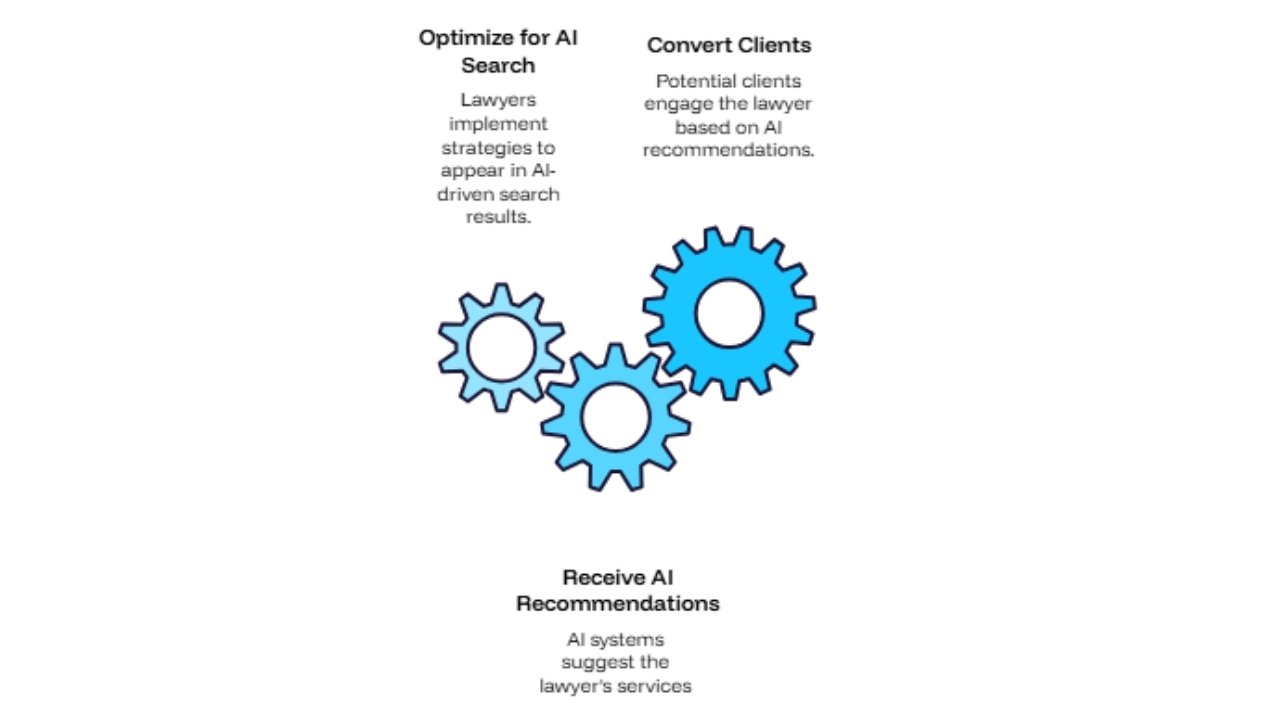
AI recommendation optimisation is the practice of systematically strengthening every data point and content signal that AI platforms use to evaluate local businesses. Unlike traditional paid advertising, which stops working the moment you stop paying, AI recommendation optimisation builds a compounding digital asset.
Every review you earn, every directory listing you update, every piece of well-structured content you publish, and every schema tag you implement adds to a growing body of evidence that AI systems draw upon when making recommendations. The businesses that invest in this process now will hold a significant structural advantage as AI becomes the primary way customers find local businesses using AI-powered tools.
Get AI Ranks offers purpose-built AI recommendation optimisation services designed specifically for Australian businesses. The platform monitors how AI tools represent your business, identifies the specific gaps holding you back, and provides an actionable roadmap for improvement.
Frequently Asked Questions
1. How do AI tools like ChatGPT decide which local businesses to recommend?
AI tools assess a combination of factors, including your Google Business Profile completeness, the volume and quality of your online reviews, NAP consistency across directories, the quality of your website content, LocalBusiness schema markup, and third-party editorial coverage. Businesses that score well across all of these areas are the most likely to be recommended.
2. Is optimising for AI search different from traditional SEO?
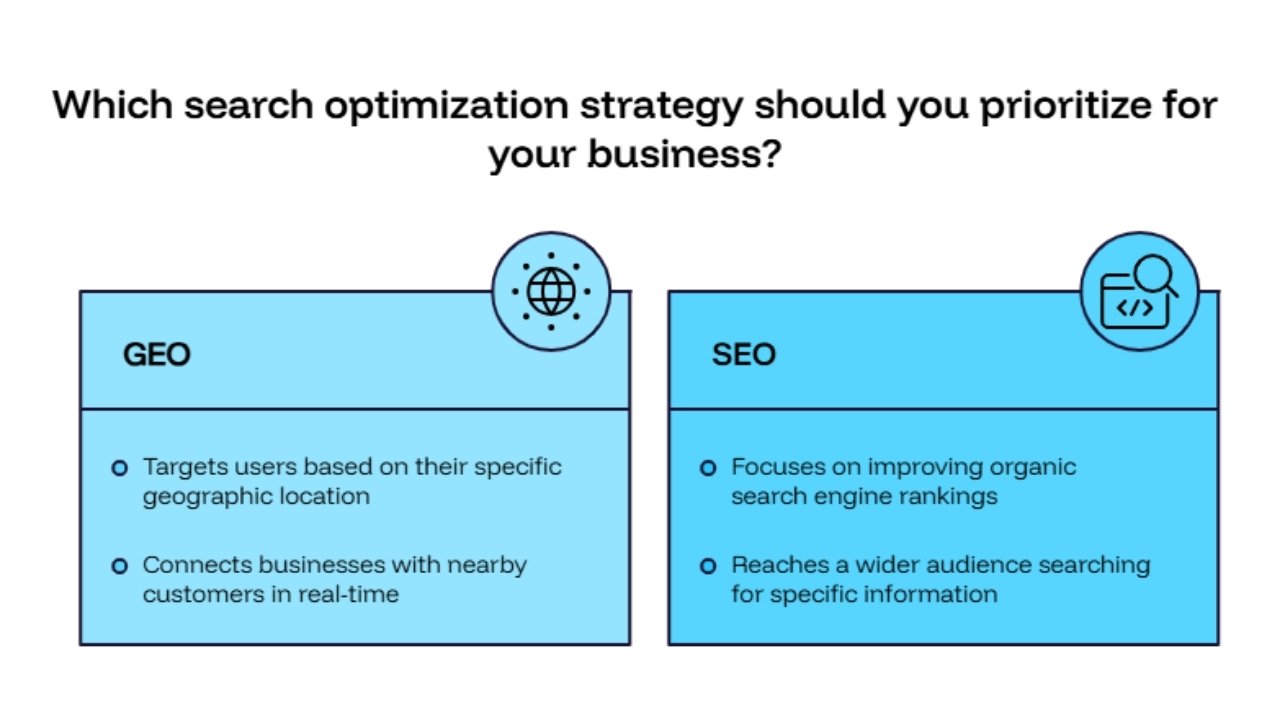
Yes, although they share many foundational elements. Traditional SEO targets keyword rankings in search engine results pages. AI search optimisation, sometimes called AEO or GEO (Generative Engine Optimisation) focuses on ensuring AI platforms have accurate, comprehensive, and trusted data about your business so they can confidently include it in natural language recommendations. The two approaches are complementary rather than conflicting.
3. How quickly can I improve my AI search visibility?
Some improvements, such as completing your Google Business Profile or fixing NAP inconsistencies, can have a relatively rapid impact. Others, such as building a strong review profile or earning editorial backlinks, take consistent effort over several months. Businesses that implement a comprehensive strategy typically see measurable improvements in AI recommendation rates within three to six months.
4. Does my business size matter for AI search visibility?
No. AI systems evaluate data signals, not business size. A well-optimised sole trader electrician with 150 genuine five-star reviews, a complete Google Business Profile, and a clear service area can outrank a large company with poor digital presence. This levels the playing field significantly for small and medium businesses in Australia.
5. Which AI platforms should I prioritise for local business visibility?
In Australia, the highest-priority platforms are currently Google (which powers both traditional search and AI Overviews), ChatGPT, and Microsoft Copilot (which uses Bing data). Perplexity AI is also growing rapidly. Optimising your Google presence first has the broadest impact because Google data feeds into multiple AI systems simultaneously.
Your AI Visibility Starts Now
Understanding how customers find local businesses using AI is not optional for Australian business owners in 2025 and beyond. It is an operational reality. AI platforms are already making recommendations in your industry and your suburb. The only question is whether your business is part of those recommendations or invisible to them.
The businesses that will win in the AI-driven local search landscape are those that treat their digital presence as a strategic asset — maintaining accurate data, earning genuine reviews, publishing quality content, and monitoring how AI systems represent them over time. This is the new standard for local business marketing in Australia, and it is accessible to businesses of every size.
The process of mastering how customers find local businesses using AI begins with an honest assessment of where your business stands today. Once you know what AI tools are saying about you and more importantly, what they are not saying you can take decisive, targeted action.