A practical guide for Australian businesses that want more leads, better Google rankings, and a presence that holds up in the age of AI search
Australia’s local search landscape has changed more in the past 18 months than it did in the five years before that.
The rise of AI-generated answers in Google, the growing use of tools like Perplexity and ChatGPT for local recommendations, and Google’s continued investment in its “AI Overviews” feature have fundamentally changed how Australians find and choose local businesses.
The old playbook stuff your website with suburb keywords, build a handful of backlinks, collect a few reviews still has some value. But on its own, it’s no longer enough to consistently outperform competitors who are adapting to the new environment.
This guide covers what’s actually working for Australian local businesses in 2026, and what an AI-powered approach to local SEO looks like in practice.
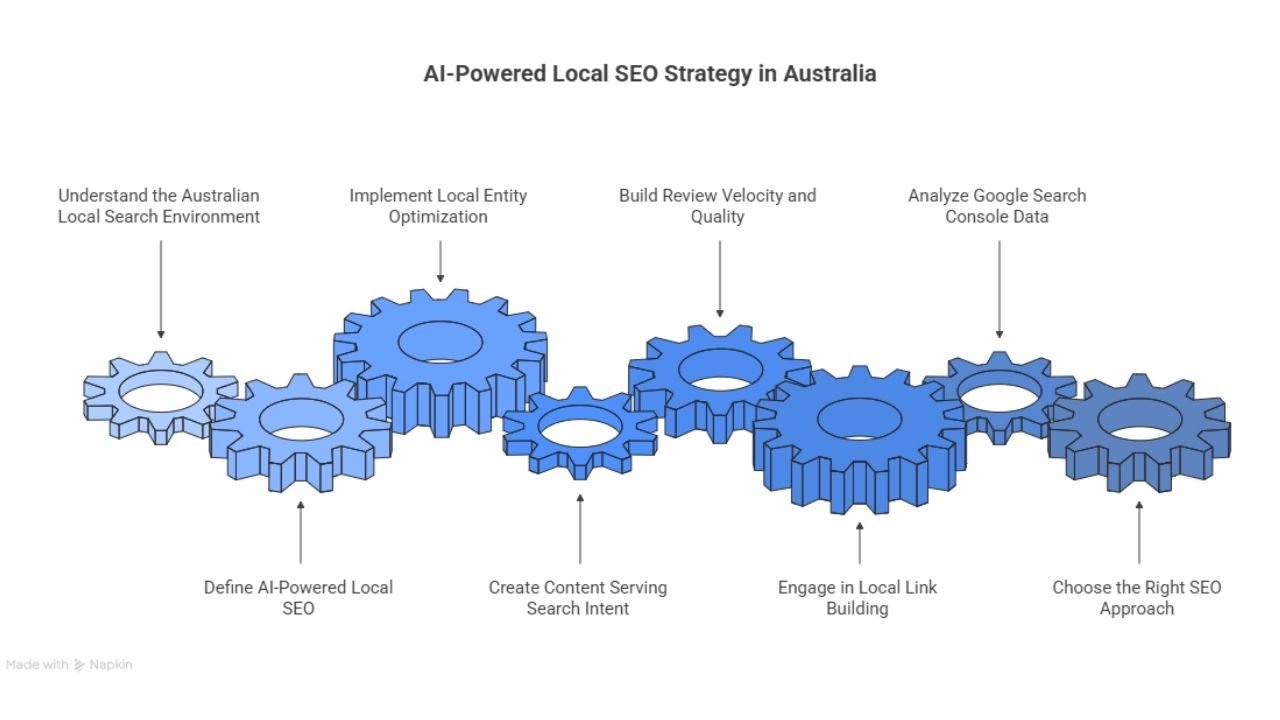
The Australian Local Search Environment Right Now
Australia has a few characteristics that make local SEO both more important and more accessible than in larger markets.
First, competition is geographically contained. A plumber in Parramatta isn’t competing with a plumber in Geelong. The competitive pool is smaller, which means that a business that does SEO well can dominate its local market relatively quickly compared to, say, trying to rank nationally in the US.
Second, Australian consumers are high-trust buyers. Reviews, word of mouth, and social proof matter enormously here. This plays directly into how AI search works because AI tools place a heavy weight on review signals, reputation, and community mentions when making local recommendations.
Third, AI tool adoption in Australia has accelerated sharply. Australians are among the highest per-capita users of AI tools in the Asia-Pacific region, and that number keeps growing. People who are using these tools are also among the most valuable customer segments; they tend to be higher-income, more decisive, and more likely to follow through on a recommendation.
If your business shows up well in AI search, you’re reaching the right people at exactly the right moment.
What “AI-Powered” Local SEO Actually Means
The term gets used loosely, so it’s worth being precise. When we talk about AI-powered local SEO services, we mean two distinct things:
Using AI tools to do SEO work better and faster. This includes using AI for keyword research, content drafting, technical audits, and competitor analysis. When used well, AI makes it possible to do more thorough SEO work at lower cost which is particularly valuable for small and medium businesses.
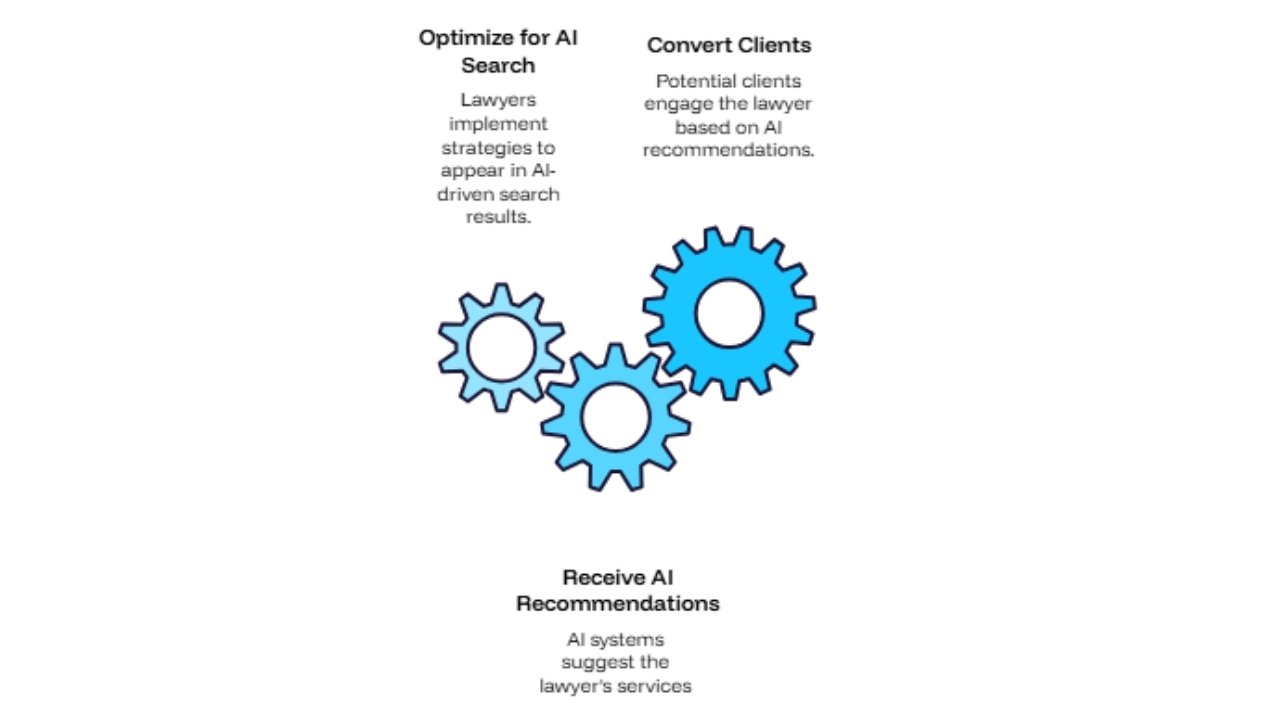
Optimising your presence specifically for AI-driven search results. This is the newer discipline making sure that when AI tools like Google’s AI Overviews, Perplexity, or ChatGPT are asked about businesses in your category and location, your business is one of the ones that comes up.
Both matter. But the second one is where Australian businesses have the most room to gain ground quickly, because so few are paying attention to it yet.
The Four Pillars of AI-Powered Local SEO in Australia
Pillar One: Local Entity Optimisation
Google and other AI systems understand the world in terms of entities specific, identifiable things with known attributes. Your business is an entity. The question is whether it’s a well-understood, clearly defined entity or a vague digital presence that AI systems can’t confidently categorise.
Local entity optimization is the process of making your business clearly identifiable and consistently represented across the web. This includes:
Your Google Business Profile. This is the single most important asset for local AI search in Australia. It feeds Google Maps, it’s referenced constantly by Google’s AI Overviews, and it signals to other AI tools that your business is a real, established operation. A fully optimised GBP complete with regular posts, up-to-date photos, answered questions, and active review management outperforms a neglected one in almost every competitive analysis we’ve seen.
NAP consistency across Australian directories. NAP stands for Name, Address, Phone. In the Australian context, relevant directories include TrueLocal, Yellow Pages, Hotfrog, Word of Mouth (WOMO), Hipages (for trades), Oneflare, and industry-specific platforms. Every listing should match your GBP exactly with the same business name, same suburb, same phone format.
Structured data on your website. Australian businesses in particular often have unstructured, template-driven websites that give AI tools very little to work with. Adding LocalBusiness schema, Service schema, and other relevant markup transforms your website from a digital brochure into something AI systems can actually read and interpret.
Pillar Two: Content That Serves Australian Search Intent
Content creation is where most Australian local businesses underinvest, and it’s where the biggest rankings and visibility gains tend to come from.
The key principle here is writing for search intent, not for search engines. What does that mean in practice? It means understanding what a person actually wants when they type a particular query and giving them that, as directly and usefully as possible.
For an Australian plumbing business, someone searching “hot water not working Melbourne” isn’t just looking for a plumber they want to know what might be wrong, whether it’s something they can fix, and if not, what it’s going to cost and how quickly someone can come. A page that addresses all of those concerns honestly and specifically will outperform a generic “emergency plumbing” service page every time.
For an Australian dental practice, someone searching “how much does Invisalign cost in Sydney” wants a real answer, not “contact us for a free consultation.” A page that explains the factors affecting cost, the typical range in Australia, and what’s included in a quality Invisalign treatment will earn more trust and more clicks than a page that withholds information to drive calls.
Suburb-specific content also continues to be one of the most powerful tools for Australian local businesses. Not thin, duplicated pages that just swap out suburb names but genuinely useful pages that acknowledge the specific area, its characteristics, and why your business is a good choice for people there.
Pillar Three: Review Velocity and Quality
In the Australian market, Google reviews carry more weight than almost any other local ranking factor. But in 2026, it’s not just the quantity and rating that matter, it’s the richness of the content within the reviews.
AI tools can read reviews. When a review mentions the suburb where the work was done, the specific service performed, the name of the technician, and a specific outcome that review is generating structured, location-specific, service-specific trust signals.
Review velocity also matters. A business with 60 reviews, all from three years ago, is weaker in AI search than a business with 60 reviews spread consistently across the past 18 months. Recency signals that the business is active, relevant, and currently serving customers well.
Building a review system isn’t complicated, but it does require consistency. The businesses that get the most reviews are usually the ones who make asking for reviews a natural, routine part of their customer handoff process.
Pillar Four: Link Building With a Local Lens
Backlinks links from other websites to yours remain a meaningful signal in local SEO, including for AI-driven results. But in the Australian context, the quality and relevance of links matters far more than the volume.
A link from your local council’s business directory, a regional news site, a well-established local industry association, or a complementary local business is worth far more than a link from a generic directory in another country.
Some of the most effective local link-building strategies for Australian businesses include:
- Being listed in, and actively engaging with, local Chamber of Commerce websites
- Contributing expert commentary to local news outlets or industry publications
- Partnering with complementary local businesses for mutual referrals and website mentions
- Sponsoring local events, community groups, or sporting clubs that list their sponsors online
- Getting featured in “best of” roundups from local bloggers or review sites
What GSC Data Is Telling Us in 2026
For businesses already doing some SEO, Google Search Console (GSC) is an invaluable window into what’s working and what’s shifted with the rise of AI search.
A few patterns that have emerged consistently in GSC data across Australian local businesses this year:
Click-through rates on informational queries have dropped. When Google’s AI Overviews answer a question directly in the search result, fewer people click through to the source. This sounds bad for traffic, but it actually creates an opportunity: businesses whose content AI Overviews cite often gain a significant uptick in brand queries, even as informational click-through rates fall.
Branded search volume is a quality signal worth tracking. An increase in people searching for your business name directly is one of the clearest indicators that your AI and general search presence is working. People see your business mentioned in an AI response, they want to know more, and they search your name. GSC tracks this.
Long-tail queries are becoming more specific. As people get more comfortable with AI tools, their search queries are getting longer and more conversational. This means that highly specific, long-form content is performing better than short, generic pages, a trend that rewards businesses willing to go deep on their subject matter.
Choosing the Right Local SEO Approach for Your Australian Business
Different businesses have different needs. A single-location café in Adelaide has different SEO priorities than a multi-location trades business operating across suburban Melbourne, which has different priorities again from a professional services firm looking to establish thought leadership across multiple Australian cities.
What they share is this: in 2026, doing nothing is no longer a neutral option. AI search is actively redistributing visibility and the businesses that don’t engage with it are giving ground to the ones that do.
The most important thing is to start, be consistent, and focus on genuine quality over shortcuts. Australian consumers are discerning. AI tools are getting better at detecting authenticity. The businesses that build real trust through great reviews, helpful content, and a coherent online presence are the ones that will keep growing.
A Final Thought on Working With an SEO Partner
If you’re considering bringing in outside help for your local SEO, the most important question to ask isn’t “how much does it cost” it’s “how do you measure success?”
The right answer involves Google Search Console growth, ranking movement on relevant local queries, increases in website traffic from organic search, and ideally, a connection between those metrics and actual leads or enquiries. If someone can’t give you a clear, honest answer to that question, keep looking.
Good local SEO AI-powered or otherwise isn’t magic. It’s the compounding effect of doing the right things consistently. The businesses that understand that, and commit to it, are the ones still growing when everyone else is complaining that “SEO doesn’t work anymore.”
Get AI Ranks works with local businesses across Australia to build the kind of search presence that earns leads in Google rankings, in Google Maps, and increasingly, in the AI tools that are changing how Australians find the businesses they trust.