A client called me a few months ago with a question I’m now hearing almost every week: “My competitor keeps showing up when I ask ChatGPT about our industry. Why them and not us?”
It’s a fair question and an important one. ChatGPT Search, Perplexity, and Google’s AI Overviews are now a real part of how people research products, services, and businesses. If your brand isn’t showing up there, you’re missing a portion of your audience that’s only going to grow.
The good news is that getting your business into these AI-generated answers is not magic, and it’s not paid placement. It follows logic that any business can act on. Let me walk you through exactly what works.
Understand Why Businesses Show Up in ChatGPT Results
Before you can optimize for something, you need to understand how it works.
ChatGPT uses two different approaches to pull information, and knowing the difference matters:
From its training data ChatGPT has been trained on a massive dataset pulled from across the internet. This includes website content, articles, reviews, forum posts, and more. If your brand is discussed and referenced in credible sources across the web, there’s a reasonable chance it’s part of what the model has learned.
From live web browsing ChatGPT Search (the browsing-enabled version) actively retrieves information from the web in real time when someone asks a question. It visits pages, reads the content, and summarises what it finds. This is the version most relevant if you want to appear in searches people are doing today.
Both matter. But the live search component is where you have the most direct influence right now.
Make Sure Your Website Actually Answers the Questions People Ask
This sounds obvious, but most websites don’t do it well.
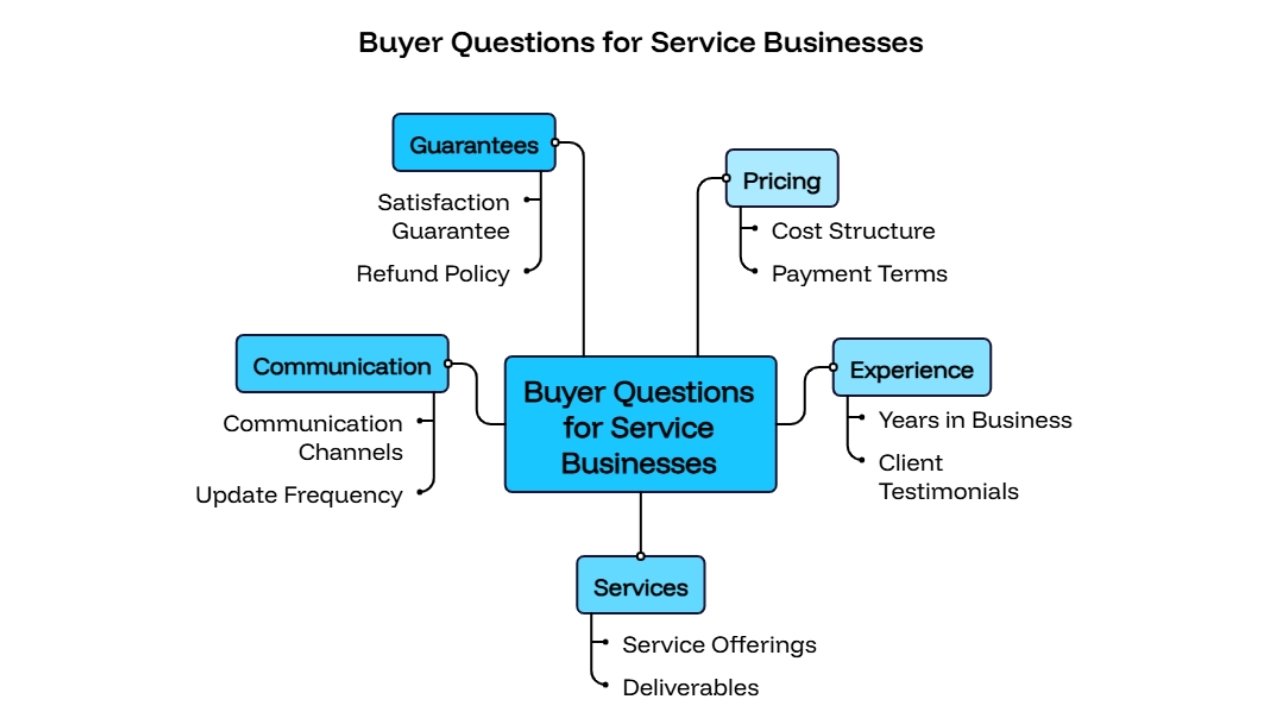
When someone opens ChatGPT and types “what’s the best [your service] for [their situation],” ChatGPT browses the web looking for pages that clearly answer that question. If your website’s content is mostly about you, your story, your team, your values and not about answering your customers’ real questions, you’re going to lose to competitors who have built more helpful content.
Go through your website and ask yourself: if a potential customer had a specific question right now, which page would answer it? And does that page actually answer it directly, or does it just kind of talk around the topic?
The pages that get referenced in AI answers are usually the ones that get to the point quickly, cover the topic thoroughly, and are clearly written by someone who knows what they’re talking about.
What to do: Map out the ten most common questions your potential customers have before they buy. Create a dedicated page or detailed section for each one. Write directly, specifically, and from experience.
Build Content That Sounds Like a Real Expert Wrote It
AI systems, especially the ones powering ChatGPT, are increasingly good at identifying shallow content versus content with genuine depth. Generic “top 5 tips” articles that could have been written by anyone about anything don’t carry the same weight as content that demonstrates firsthand experience and specific knowledge.
When I write content for a client’s site, I always push them toward specificity. Not “we help businesses improve their marketing” but “here’s what we learned about B2B lead generation after running campaigns for SaaS companies over three years, including what didn’t work.”
Specific claims, real examples, and original perspectives signal to AI systems that there’s genuine expertise behind the content. That’s what gets referenced.
What to do: Audit your existing content. Pull out anything that reads as generic or thin. Add real examples, specific numbers from your own experience (even rough ones), and your genuine perspective on how things work in your industry.
Get Your Business Mentioned Elsewhere on the Internet
ChatGPT doesn’t only look at your website. It looks at the broader conversation about your industry, and it pulls from sources that have authority industry publications, review platforms, news sites, forums, and more.
If your business only exists on your own website, AI tools have limited reason to trust you or reference you. But if your name appears in a reputable industry article, if customers are reviewing you on platforms like Trustpilot or Google, if you’ve been quoted in a podcast transcript, if someone wrote a comparison piece that included your product all of that creates a footprint.
Think of it like reputation. ChatGPT doesn’t know you personally. It knows what other people have said about you across the internet. The more credible sources talking about you in positive, accurate terms, the more likely you are to show up.
What to do: Start a simple PR habit. Reach out to industry blogs for guest posts. Ask happy customers to leave reviews on public platforms. Get quoted in niche newsletters. Offer yourself as a podcast guest. These mentions compound over time.
Structure Your Web Pages So AI Can Read Them Easily
When ChatGPT Search visits your website, it’s reading your page and trying to extract the most relevant answer to the user’s question. If your page is difficult to parse large blocks of text, no clear headings, no logical structure it’s harder for the AI to pull a useful answer.
Compare these two approaches:
Hard to extract: A long paragraph that mixes your company history, your services, your pricing philosophy, and a few customer quotes all together, with no headings or clear sections.
Easy to extract: A page with clear H2 and H3 headings that each address a specific aspect of the topic. Each section starts with a direct sentence that answers the question. A FAQ section at the bottom covers specific queries.
The second format makes it easy for both a human reader and an AI system to find what they’re looking for quickly.
What to do: Revisit your most important service pages and blog posts. Break up long blocks of text with descriptive headings. Add a FAQ section to any page where visitors commonly have questions. Front-load each section with the answer and don’t bury the key point in the third paragraph.
Keep Your Business Information Consistent Everywhere
ChatGPT and similar tools often synthesize information from multiple sources. If your business name, website, location, or services are described inconsistently across the web with different descriptions on different platforms, old addresses, outdated services it can create confusion and reduce confidence in the AI’s ability to reference you accurately.
Your Google Business Profile, your LinkedIn page, your website’s About section, your social profiles, and any directory listings should all paint a consistent, accurate picture of who you are and what you do.
What to do: Do a quick audit of your presence across major platforms. Make sure your business description, services, and contact details are accurate and consistent everywhere. This helps both traditional SEO and AI visibility.
Use Schema Markup to Give AI Tools More to Work With
Schema markup is a type of structured data that you add to your website’s code. It tells search engines and AI tools specific things about your business: your name, location, opening hours, services, reviews, and more in a format they can easily read.
Google uses schema markup to power rich results. AI tools use it to pull accurate, structured information about your business. Adding it to your site is a relatively technical task but a very worthwhile one.
At a minimum, most local and service businesses should have:
- Organisation or LocalBusiness schema on their homepage
- FAQ schema on pages with frequently asked questions
- Review or Rating schema if applicable
- Service schema for key service pages
What to do: Ask your developer or use a plugin (if you’re on WordPress, there are several good ones) to implement basic schema markup across your site. It takes time upfront but makes your content significantly more readable to AI systems.
Demonstrate That Real People With Real Expertise Are Behind Your Business
One of the strongest signals for both Google and AI tools in 2026 is author authority, the idea that the content on your website is written by or attributed to someone with demonstrable expertise in that field.
This is part of what Google calls E-E-A-T: Experience, Expertise, Authoritativeness, and Trustworthiness. AI tools take similar signals into account when deciding whether to reference your content.
If your blog posts and service pages are written by “Admin” with no author bio, that’s a missed opportunity. If they’re written by a named person with a bio that describes their actual experience, links to their LinkedIn, and maybe mentions where they’ve been published elsewhere that’s a trust signal.
What to do: Add author bios to all content. Make them specific not just “Jane is a marketing consultant” but “Jane has spent the last eight years running paid search campaigns for e-commerce brands, primarily in fashion and home goods.” Specificity builds credibility.
One More Thing Worth Saying
There are no guaranteed shortcuts into ChatGPT’s answers. If someone promises to “get you into AI results” via tricks or hacks, be cautious. AI systems are getting better at detecting manipulative tactics, and what works as a hack today can actively harm your visibility tomorrow.
The businesses that consistently show up in AI-generated answers share something in common: they’ve built genuine digital presence over time. Good content, real authority, consistent effort.
That’s also the kind of work that builds trust with human readers, earns referrals, and grows a business sustainably.
Getting found in ChatGPT isn’t a separate strategy from building a trustworthy online presence. It’s the same thing, seen from a new angle.
A Quick Summary of the Actions That Matter Most
If you take nothing else from this post, focus on these:
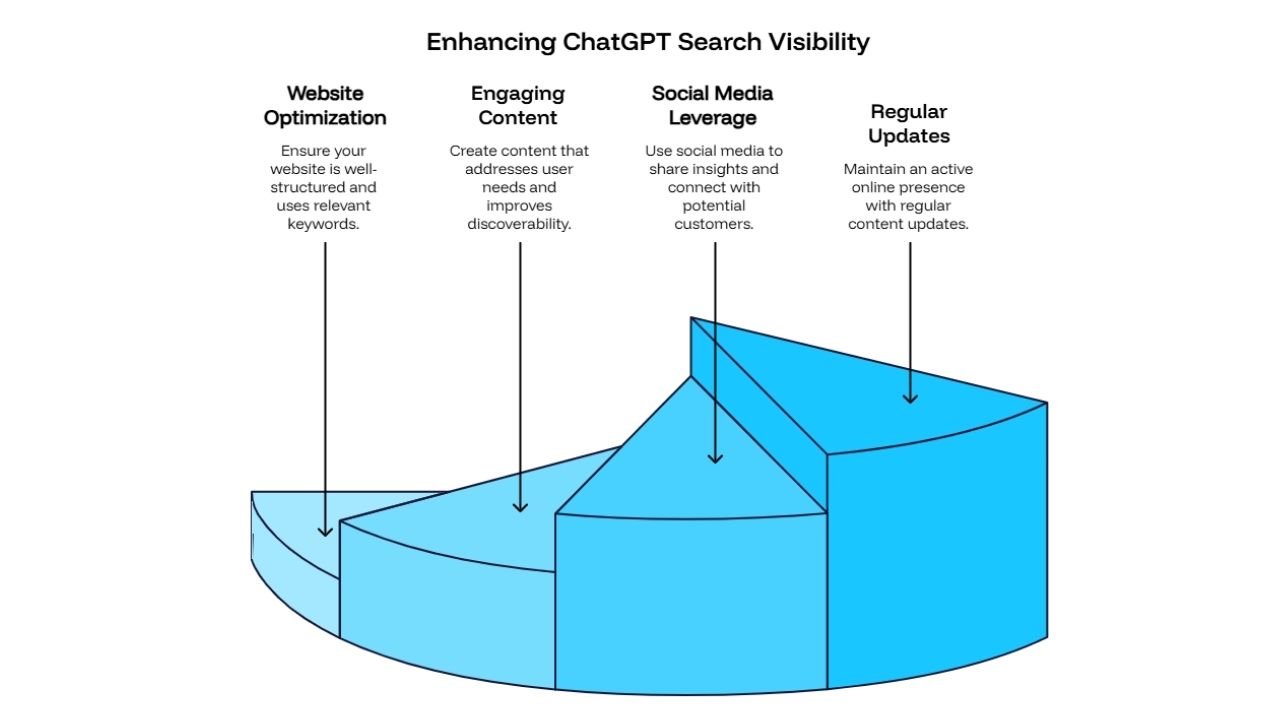
Write content that directly answers real questions your customers have, in the specific and honest way an expert would answer them. Build your presence beyond your own website through mentions, reviews, and features. Structure your pages so they’re easy to read and extract from. Keep your business information accurate and consistent. Show who’s behind the content and why they’re worth listening to.
Do those things well, and you’ll be visible in ChatGPT, in Google, and anywhere else people are looking for what you offer.