The question I hear most from business owners right now is not “should I do SEO?” They already know they should. The question is “which kind?”
Because if you have been paying attention to search over the past year or so, you know something has changed. The way people find information — and the way Google decides what to show them — looks meaningfully different than it did even eighteen months ago.
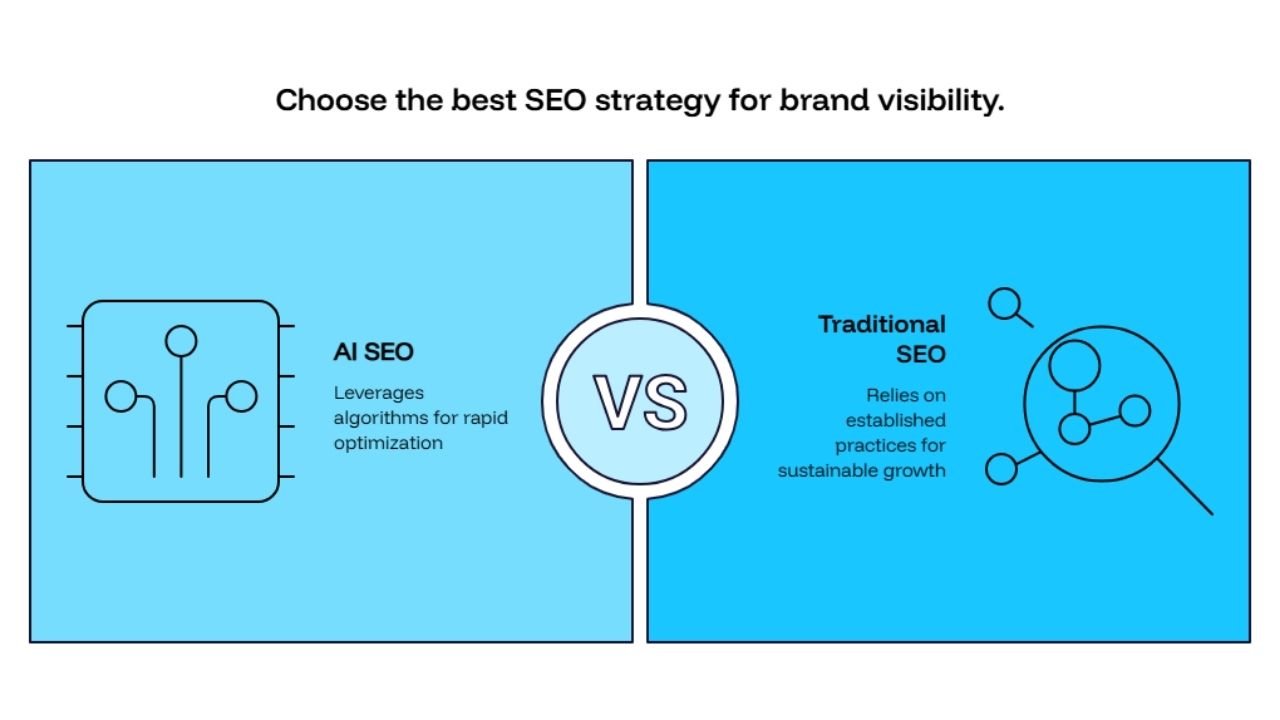
So let us be direct about it. Traditional SEO and AI SEO are not the same thing. They overlap in important ways, but they reward different behaviours, operate on different timelines, and build visibility through different mechanisms.
Here is an honest breakdown of both.
What We Mean by Traditional SEO
Traditional SEO is the set of practices most of us grew up with in this industry. You research keywords people are searching for, you create pages that target those keywords, you earn backlinks from other websites, you make sure your technical foundation is solid, and you wait for Google to rank you.
Done well, it works. It builds traffic that compounds over time. A well-optimised page can hold a top ranking for months or years and keep sending visitors without any additional spend.
The catch is the timeline. For a new site with limited authority, meaningful organic traffic from traditional SEO often takes six months to a year before it really kicks in. And for highly competitive terms, it can take longer.
Traditional SEO is fundamentally a game of patience and persistence.
What We Mean by AI SEO
AI SEO is a newer category that encompasses how you optimise content to be cited, referenced, or surfaced by AI-powered search experiences. That includes Google’s AI Overviews, which now appear at the top of results for a wide range of queries, as well as tools like ChatGPT Search, Perplexity, and Microsoft Copilot.
The goal is not just to rank on a list — it is to become the answer. When someone asks an AI tool a question, your content is what it draws from. Your brand name appears in the response. Your credibility is being vouched for by the AI system itself.
This requires a different kind of content thinking. Less focus on keyword density, more focus on genuine clarity and authority. Less focus on length for its own sake, more focus on answering questions directly and completely.
Where They Genuinely Differ
Intent matching. Traditional SEO trained us to match keywords. AI SEO trains us to match intent at a deeper level. AI systems are trying to understand what someone actually means and what would genuinely help them — not just which page contains the right words. Content that addresses the full context of a question, anticipates follow-up questions, and treats the reader as an intelligent adult tends to do better in AI-driven environments.
Format and structure. For traditional SEO, long-form content has generally outperformed shorter pieces, all else being equal. For AI SEO, structure matters more than length. Clear headings, direct answers near the top, FAQ sections, and well-organised information make it easier for AI systems to extract and cite your content. A focused, well-structured article can outperform a sprawling one.
Speed of visibility. This is where things get interesting. Traditional SEO visibility is slow to build — you are waiting for Googlebot to crawl, index, and eventually promote your content through its ranking signals. AI visibility can be faster because AI systems can start citing your content before it has climbed to the top of a traditional SERP. If your content is clearly authoritative and well-structured, it can appear in AI-generated answers relatively quickly — sometimes within weeks of publication.
The type of visibility. Traditional SEO visibility means your link appears in a list. Someone has to see it, choose to click, and arrive at your page. AI SEO visibility often means your content is paraphrased inside an answer, with your brand name as the attributed source. The user may not click at all — but they encountered your name. These are genuinely different outcomes, and which one matters more depends entirely on what you are trying to accomplish.
Which One Builds Brand Visibility Faster?
The honest answer is that it depends on what you mean by visibility.
If you mean traffic to your website, traditional SEO, once it matures, is still unmatched. A site that ranks in positions one through three for high-intent keywords consistently drives clicks. AI citations do not always translate to clicks.
If you mean your name appearing in front of potential customers, AI SEO can move faster. Because AI systems are not purely ranking by domain authority the way traditional Google ranking does, a newer or smaller brand with genuinely excellent content has a real opportunity to get cited by AI tools ahead of larger competitors. That kind of name recognition — being mentioned as a trusted source — can build brand awareness at a pace that would take much longer through traditional ranking alone.
If you mean both, then the answer is to pursue both at the same time, which is exactly what any coherent content strategy in 2026 should be doing.
What the Two Approaches Share
Despite their differences, traditional SEO and AI SEO agree on the fundamentals more than they disagree.
Both reward genuine expertise. Content written by someone who actually knows what they are talking about consistently outperforms content that simply targets keywords or tries to game the system.
Both reward trust. Backlinks, brand mentions, consistent publishing, and a strong domain reputation help you in traditional search. They also help you in AI search, because AI systems use many of the same authority signals to decide whose content to trust.
Both punish thin or manipulative content. Keyword stuffing, low-quality AI-generated filler, and content that exists only to rank rather than to help — these approaches are failing faster than ever, in both traditional and AI search environments.
The Visibility Race in Practice
Let me paint a picture of how this plays out for a real business.
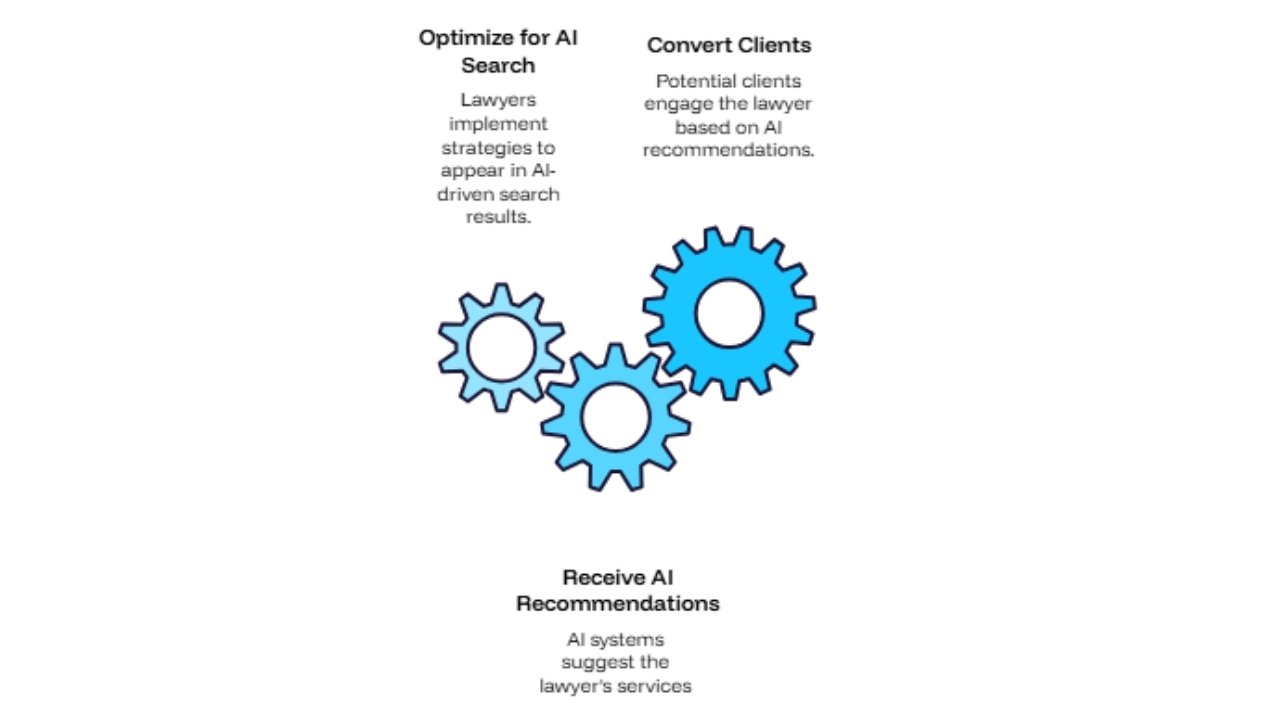
A legal services firm starts publishing well-researched answers to the questions their clients ask most often. They write clearly, they attribute everything correctly, and they demonstrate genuine expertise on their topic.
Within a few months, their content starts appearing in AI Overviews on Google when people ask related legal questions. The firm’s name is being seen by people who might never have clicked a search result but are now being exposed to the brand through an AI response.
Simultaneously, those same pages are accumulating ranking signals through traditional SEO. Over time, the same content that built AI visibility starts driving direct organic traffic as well.
The two strategies compound. You are not choosing between them — you are building toward both with the same well-executed content.
What to Actually Do
If you are trying to build brand visibility as effectively as possible in 2026, here is the practical truth:
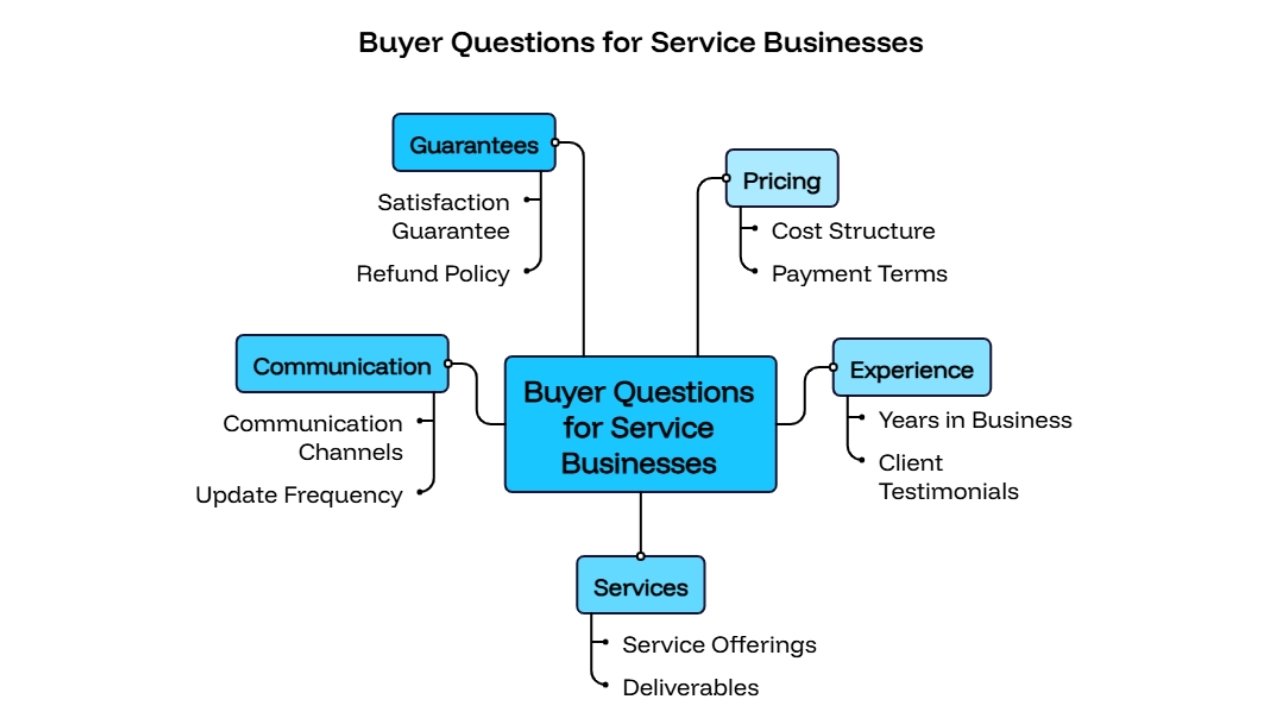
Start with the questions. Find out what your potential customers are genuinely asking — in search, in AI tools, in forums and communities — and answer those questions comprehensively and clearly.
Write for humans first. The content that performs best in both traditional and AI search is content that a real person would find genuinely useful. No jargon for jargon’s sake, padding, and vague generalities. Actual, useful information.
Build authority steadily. Earn coverage on credible industry sites, maintain a consistent publishing cadence, and make sure your on-site expertise signals — author bios, case studies, original insights — are visible and current.
Keep your technical foundation clean. Fast load times, mobile-friendly design, solid internal linking, and proper structured data markup all still matter and will continue to matter as search evolves.
Track both types of visibility. Monitor your traditional rankings in Google Search Console, but also periodically check how AI tools like ChatGPT and Perplexity respond to questions in your niche. Are they citing you? If not, ask yourself why — and let that guide your content decisions.
The Real Question
The debate of “AI SEO vs traditional SEO” is a little bit of a false choice. They are converging, not competing. Google itself is blending them — the same content that ranks in traditional results is often the content that gets pulled into AI Overviews.
What the question is really asking is: where should I put my energy right now?
And the answer is to invest in content that earns trust. Content written with real expertise, structured for clarity, and published consistently on a website with a growing reputation. That content works in traditional search, in AI-generated answers, and in every search format that has not been invented yet.
In a world where the tools keep changing, creating genuinely trustworthy content is the one strategy that never goes out of date.
Published by GetAIRanks.com — Helping businesses get found in the age of AI search.