Not too long ago, if you wanted to find something online, you typed it into Google, scanned a list of links, clicked one, and read the page. Simple.
That model isn’t going away — but it’s changing faster than most business owners realise. A growing number of people are now skipping the link list entirely. They’re typing their question into ChatGPT, Perplexity, Google’s AI Overviews, or Gemini and getting a direct, written answer. No clicking required.
This shift is what makes Generative Engine Optimisation — GEO — one of the most important things to understand if you care about being found online in 2026.
Let Me Explain GEO Without the Jargon
When someone asks an AI tool a question — say, “what’s the best email marketing platform for an e-commerce store?” — the AI doesn’t show them a list of links to click through. It gives them a direct answer. It might say something like: “For e-commerce, tools like Klaviyo are often recommended because of their segmentation features. Some businesses also use Mailchimp if they’re at an earlier stage.”
Now here’s the question: how did Klaviyo get into that answer? Did they pay for it? Did they stuff keywords somewhere? No. The AI has learned from everything that’s been written about email marketing across the internet — reviews, articles, comparisons, forum discussions, expert opinions — and it’s synthesising that into a confident answer.
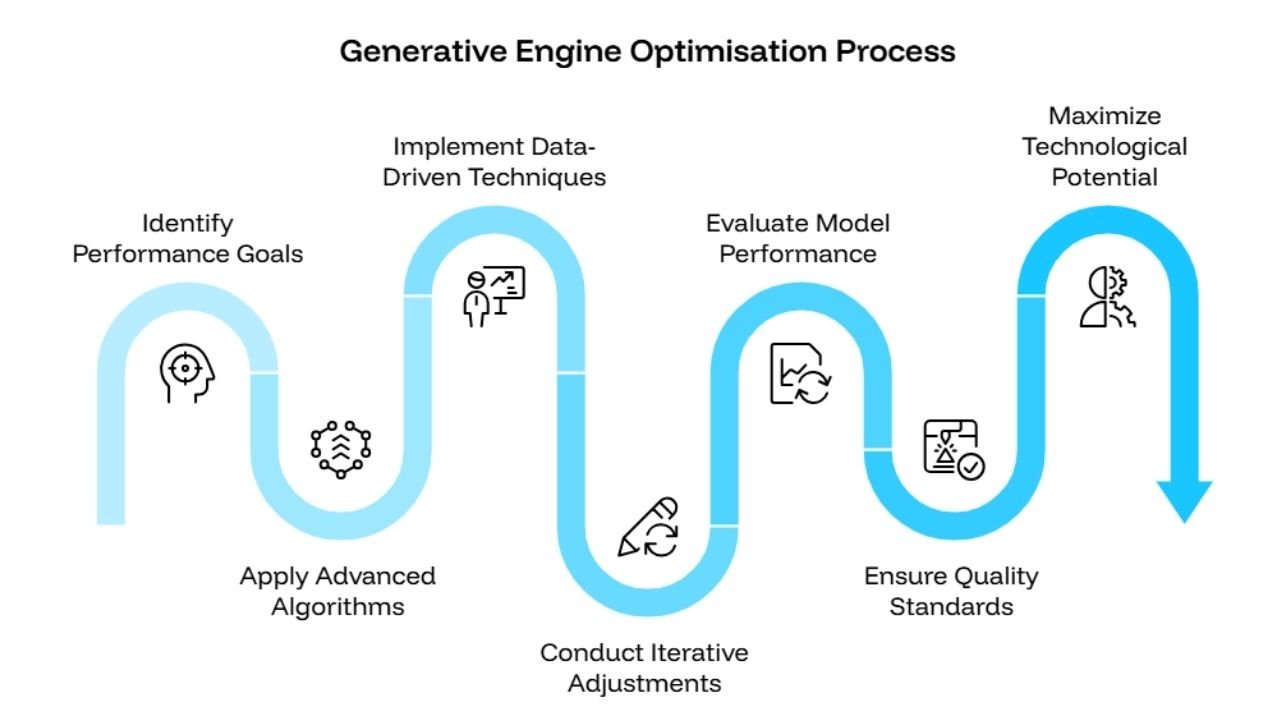
Generative Engine Optimisation is the practice of making sure your brand, your content, and your expertise shows up in those AI-generated answers.
It’s not about gaming an algorithm. It’s about being genuinely present and trusted across the internet, so that when AI tools look for an answer in your field, you’re part of it.
Why GEO Is Getting More Attention in 2026
The numbers behind AI tool usage have shifted dramatically. ChatGPT, Perplexity, and similar tools now handle an enormous volume of questions that would previously have gone to Google. And Google itself has expanded AI Overviews — those AI-written summaries at the very top of search results — across more queries.
This means that even when someone does go to Google, they might get their answer from an AI summary before they ever see your link. If your content isn’t informing those summaries, you’re invisible to a growing portion of your audience.
GEO is the response to that reality.
How GEO Actually Works
Understanding GEO requires understanding a bit about how large language models (the technology behind AI tools) get their information.
There are broadly two ways AI tools know things:
Training data — AI models are trained on huge amounts of text from the internet. What gets published, shared, and cited across reputable sources gets baked into what the AI “knows.” If your brand, your opinions, your research are referenced across the web, there’s a reasonable chance that knowledge is in the model.
Real-time retrieval — Some AI tools (like Perplexity and Google with its AI Overviews) don’t rely only on training data. They also fetch live results from the web and synthesise them. This is called Retrieval-Augmented Generation (RAG). In this case, your website’s content can directly feed into an AI answer — if your page is well-structured and clearly answers the query.
GEO covers both of these. It’s about building the kind of presence that shows up in both scenarios.
What GEO Looks Like in Practice
If you’re wondering what someone actually does to optimize for generative engines, here’s how I break it down with clients.
Build Content That Directly Answers Questions
AI tools love content that’s structured around real questions and gives clear, direct answers. Think about the questions your potential customers are genuinely asking — not just search queries, but the things they’d type into ChatGPT at 10pm when they’re trying to figure something out. Write content that actually answers those questions well.
Demonstrate Real Expertise
AI systems are getting better at distinguishing between shallow, generic content and content written by someone with genuine knowledge and experience. Author bios matter. Firsthand experience matters. Specific, practical insights that you can only write if you’ve actually done the work — that matters.
This is why a well-written case study from a real project can do more for your GEO than ten generic “top tips” articles.
Get Mentioned in the Right Places
If authoritative websites — industry publications, news sites, well-respected blogs — are writing about your brand, citing your research, or quoting your expertise, AI tools are more likely to reference you. This is similar to the logic behind link building in SEO, but it goes further. Podcast mentions, forum discussions, reviews, social proof — all of this contributes to your entity’s digital footprint.
Structure Your Content Clearly
When AI tools retrieve content in real time, they extract answers from web pages. If your page is a wall of text with no clear structure, it’s harder to extract. Use descriptive headings. Answer questions directly in the opening sentences of each section. Use FAQ sections where they make sense. Make it easy for both humans and machines to find the answer quickly.
Keep Your Information Accurate and Up to Date
AI tools, particularly those using real-time retrieval, give more weight to current, accurate information. Outdated pages with wrong information can actually work against you. Regularly reviewing and refreshing your content is part of responsible GEO.
What GEO Is Not
GEO is not keyword stuffing for AI bots. There’s no prompt injection trick that gets you into ChatGPT answers. There’s no shortcut that bypasses actually being trustworthy and expert in your field.
Some people are trying tactics like embedding hidden prompts in their website content that tell AI tools to cite them. These approaches don’t work well and can actively backfire — if an AI tool detects manipulative content, it learns to distrust the source.
GEO rewards legitimacy. It’s a longer game, but it’s a cleaner one.
How GEO Connects to SEO
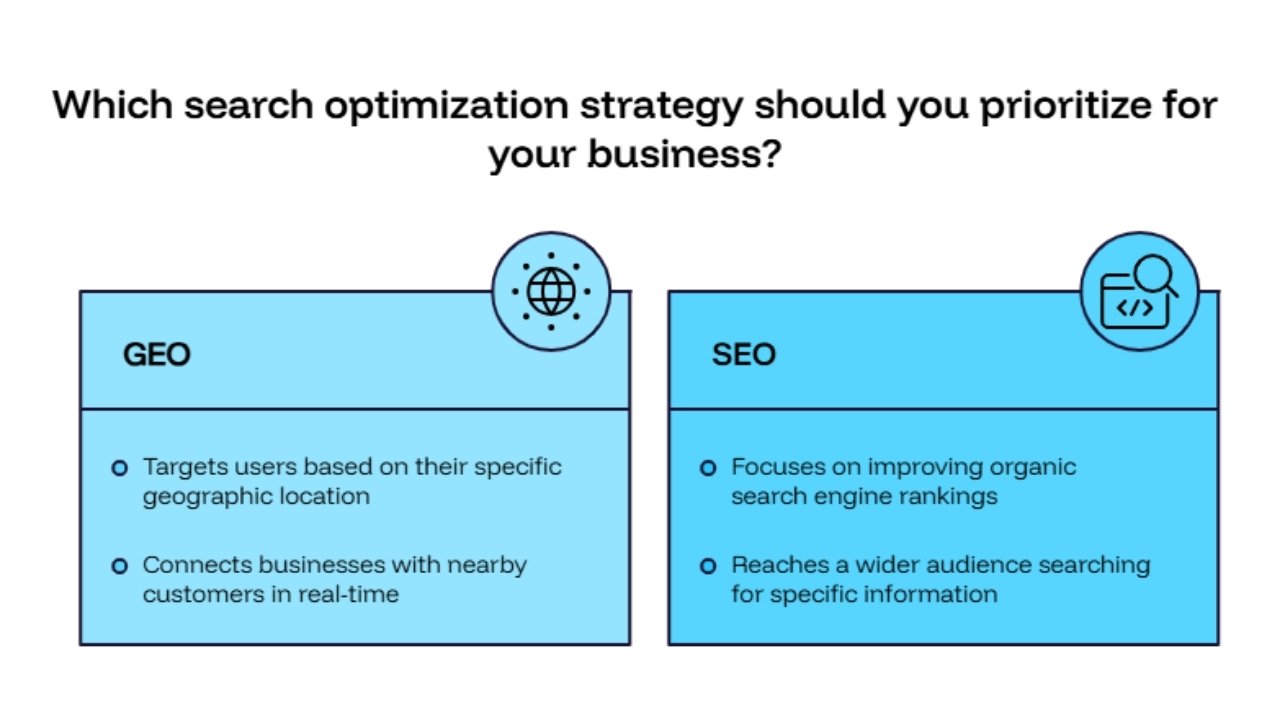
Here’s something I tell every client who asks me about GEO: you cannot do GEO well without a solid SEO foundation.
The things that make you rank well in Google — quality content, domain authority, backlinks, technical site health, structured data — are the same things that give AI systems the raw material they need to reference you.
If your website has thin content and no domain authority, AI tools have no reason to cite you, even if your product or service is excellent. The digital footprint has to exist first.
So SEO and GEO are not competing disciplines. They’re complementary. Strong SEO creates the conditions for GEO to work.
A Simple Way to Think About It
Imagine the internet as a conversation about every topic imaginable. Google SEO gets you into that conversation with a strong, visible presence. GEO makes sure that when someone asks an AI to summarise that conversation, your voice is one of the ones it references.
The businesses building real authority, creating genuinely useful content, and earning genuine trust across the internet are the ones who will benefit from both — now and as AI tools become even more central to how people find information.
Where to Start If GEO Is New to You
If you’re just starting to think about this, here’s a simple order of operations:
Start with your content. Read your most important pages as if you’re a new visitor who knows nothing about your business. Do they actually answer the questions your ideal customers are asking? Are they specific, practical, and written with real expertise?
Then look at your presence. Is your brand mentioned anywhere beyond your own website? Do other sites link to you? Have you been featured, quoted, or cited by anyone else?
Then look at your structure. Can someone (or an AI) scan your page and quickly find the answer to a specific question? Or do they have to wade through paragraphs before getting to the point?
GEO is about becoming the kind of source that the internet trusts. That’s not a quick fix — but it’s also not mysterious. It’s the same quality-first thinking that has always been at the heart of good marketing.