If you’ve been keeping up with digital marketing in 2026, you’ve probably started hearing the term “GEO” thrown around a lot. And if you’re running a business website, you might be wondering — is this something I need to care about? Do I drop everything and pivot, or is this just another buzzword that’ll fade in six months?
I’ve been doing SEO for over a decade. I’ve watched Google go from ten blue links to featured snippets to AI Overviews. And now we have GEO — Generative Engine Optimisation. Here’s my honest take on what it is, how it compares to traditional SEO, and what you should actually be doing right now.
First, Let’s Get Clear on What SEO Actually Is
Search Engine Optimisation is the practice of making your website visible in search engine results — primarily Google. It involves understanding what people search for, creating content that answers those queries, building authority through backlinks, and making sure your technical setup doesn’t get in the way.
SEO is built around one core idea: Google crawls your website, indexes your pages, and ranks them based on hundreds of signals — content quality, authority, page experience, relevance, and more.
When someone types “best accounting software for small business” into Google, SEO determines whether your page shows up on page one or page five.
So What Is GEO Then?
Generative Engine Optimisation is the process of making your brand, content, and expertise visible in AI-generated answers — like Google’s AI Overviews, ChatGPT, Perplexity, Gemini, and similar tools.
When someone asks ChatGPT “what’s the best CRM for a 10-person team?” — they’re not browsing ten blue links. They’re getting a direct, conversational answer. GEO is about making sure your business shows up in that answer, or at least that your expertise influences it.
The key difference is this:
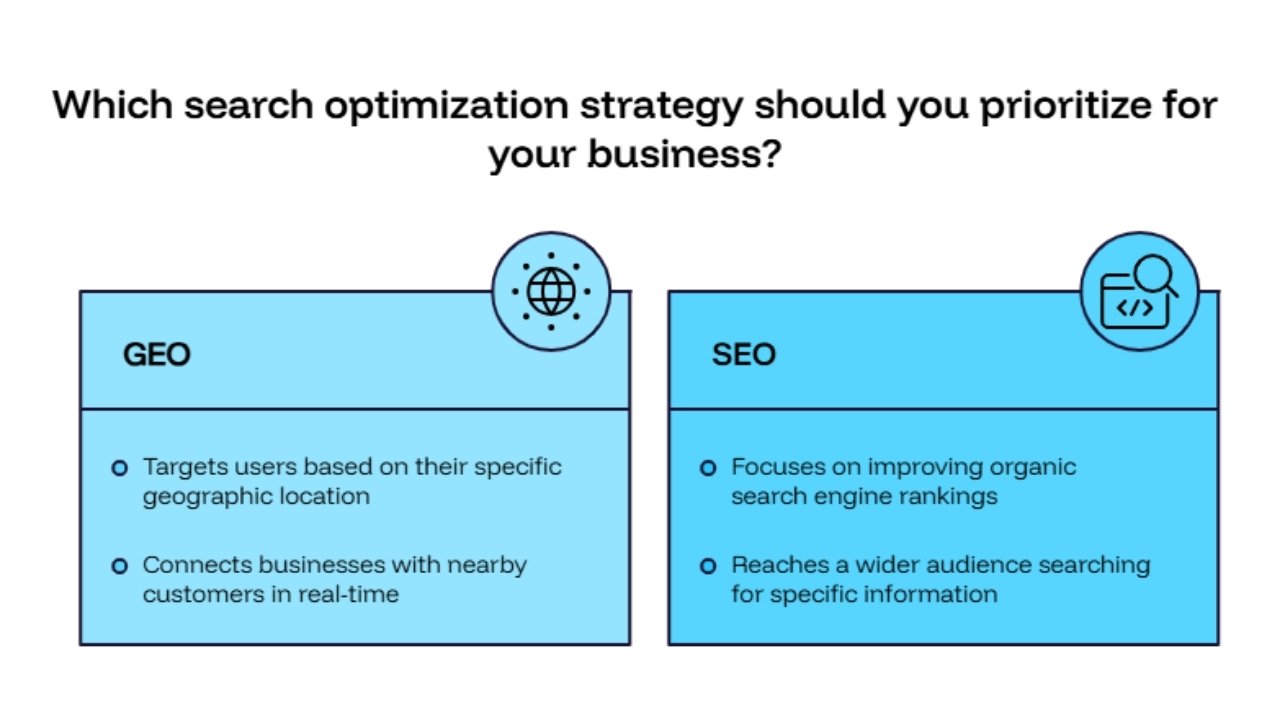
- SEO → gets you ranked in a list of links
- GEO → gets you cited, referenced, or recommended inside an AI-generated answer
The Real Differences Between GEO and SEO
How the Engines Work
Traditional search engines crawl and index pages based on signals. They rank pages. Users click through to your site.
Generative engines (AI tools) read massive amounts of information during training or via real-time retrieval, then synthesise an answer. There’s no list to rank on. The AI either includes you or it doesn’t.
What “Visibility” Means
In SEO, visibility means your page appears in results. Someone can see your URL and click it.
In GEO, visibility means your brand, your content, or your point of view gets reflected in the AI’s answer — sometimes with a citation, sometimes without. The user might never visit your site, but they hear your name or trust your angle because an AI said it.
What You’re Optimising For
SEO optimises for keywords, search intent, authority, and technical structure.
GEO optimises for being a trusted, citable source of information. It rewards brands that are genuinely known, genuinely expert, and genuinely mentioned across the web.
How Long It Takes to See Results
SEO takes time — weeks to months to see movement. But it’s measurable, trackable, and responds to changes you make.
GEO is more unpredictable. AI models are trained on data with cutoffs. They update over time. Getting cited in AI answers today requires having a solid digital footprint built over time — and that footprint largely comes from… doing good SEO.
The Part Most People Miss: GEO Runs on the Same Fuel as SEO
Here’s the thing that surprises a lot of business owners when I explain it.
You cannot build GEO visibility on thin air. AI tools pull from what already exists on the internet — articles, reviews, forum posts, interviews, cited research, authoritative websites. If your brand has no SEO presence, if your site has thin content, if you have no backlinks, if nobody’s talking about you anywhere — the AI has nothing to reference.
Strong SEO creates the raw material that GEO relies on.
So the question isn’t really “SEO vs GEO.” It’s “am I building the kind of digital presence that earns visibility everywhere?”
Where They Overlap
Quality content matters for both. Google’s ranking systems and AI training both reward content that is accurate, helpful, well-structured, and written by people with real expertise.
Authority and trust matter for both. Backlinks and mentions from reputable sources signal trust to Google. They also signal to AI systems that your content is worth referencing.
Structured information helps both. Clear headings, logical structure, FAQs, and well-organised pages help Google understand your content — and they also help AI extract answers from your pages more easily.
E-E-A-T (Experience, Expertise, Authoritativeness, Trustworthiness) is a Google ranking concept, but it maps almost perfectly onto what makes an AI likely to cite you. If your content genuinely demonstrates real-world experience and subject matter expertise, both systems reward you.
Where They Actually Differ in Practice
Keyword targeting is central to SEO. You research what people type into Google and you optimize pages around those phrases.
GEO doesn’t work on keyword targeting in the same way. AI answers are conversational and contextual. You’re optimising more for topics, entities, and reputation than for specific keyword strings.
Click-through traffic is the goal of SEO. You want the person to land on your page.
With GEO, sometimes there’s no click. The user gets their answer and moves on. This means your brand might get awareness without a visit — which is still valuable, but harder to measure.
Link building is a core SEO tactic. For GEO, what matters more is genuine mentions — being talked about on podcasts, in articles, in reviews, in communities. The more places you exist authentically on the internet, the more AI systems “know” you.
Which One Do You Actually Need?
My honest answer: you need both, but you should build in the right order.
If you’re starting from scratch or your SEO foundation is weak — focus on SEO first. Get your technical setup right. Build genuinely useful, well-structured content. Earn backlinks from real sources. Build your domain’s reputation. This foundation makes GEO possible.
If your SEO is already in decent shape — start layering in GEO thinking. Add author bios and demonstrate expertise. Get mentioned in industry publications. Create content that directly answers the kinds of conversational questions people ask AI tools.
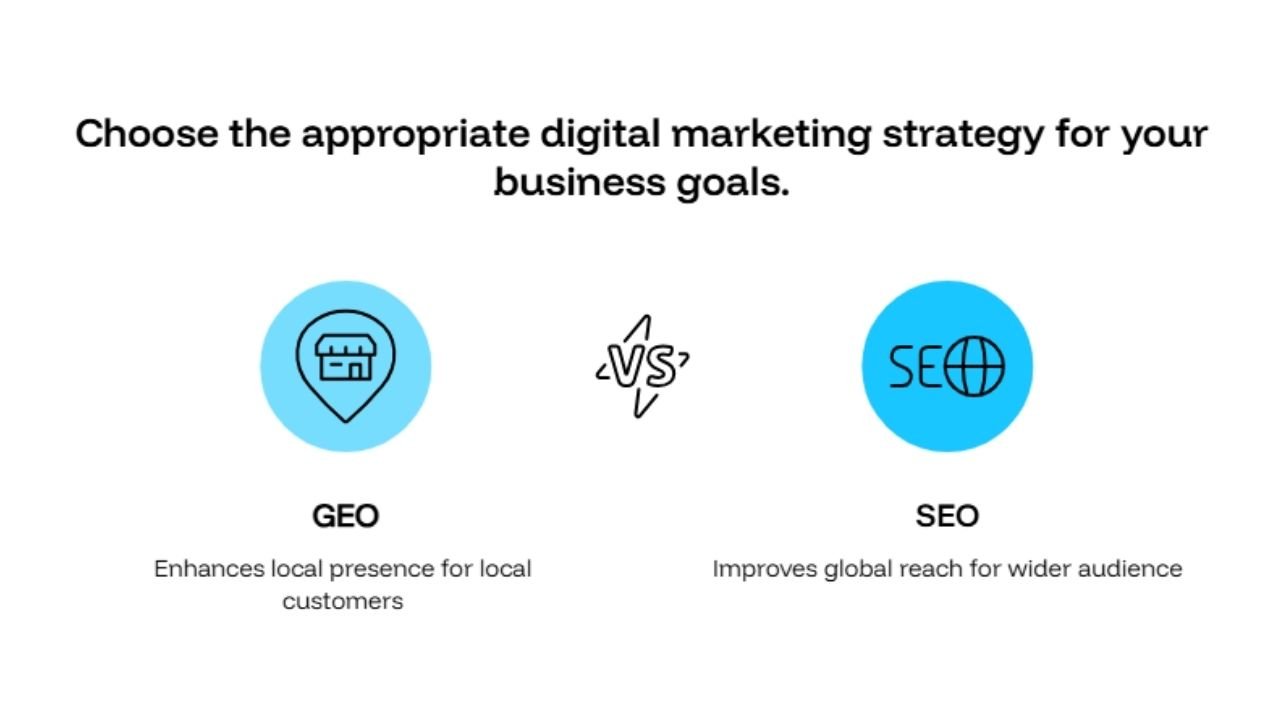
If you’re a local business — traditional SEO (especially local SEO) still drives the majority of your discovery. GEO matters, but it’s secondary.
If you’re a knowledge business, consultant, agency, or SaaS — GEO is becoming increasingly important. Your target customers are using ChatGPT and Perplexity to research options. You want to be part of those answers.
The Bottom Line
GEO is not a replacement for SEO. It’s an evolution of the same core idea — be the most trusted, most visible, most relevant voice for your audience, wherever they’re looking.
The businesses that will win in 2026 and beyond are the ones building real expertise, publishing consistently useful content, earning genuine authority, and making sure their digital presence is strong enough to be picked up by every system — search engines, AI tools, and everything that comes next.
Don’t chase tactics. Build a presence that deserves to be found.