Most business owners have never checked what ChatGPT or Gemini actually says about their business — and honestly, most have never thought to. It’s understandable. For years, the only thing worth checking was your Google ranking. But if you’ve read anything about AI visibility lately, you already know that’s no longer the full picture.
The good news is that finding out where you stand doesn’t require any special tools or technical skills. You can do a meaningful first audit yourself, in an afternoon, using nothing but the AI tools that are already free to use. Here’s exactly how I walk clients through it.
Step 1: Make a List of Real Customer Questions
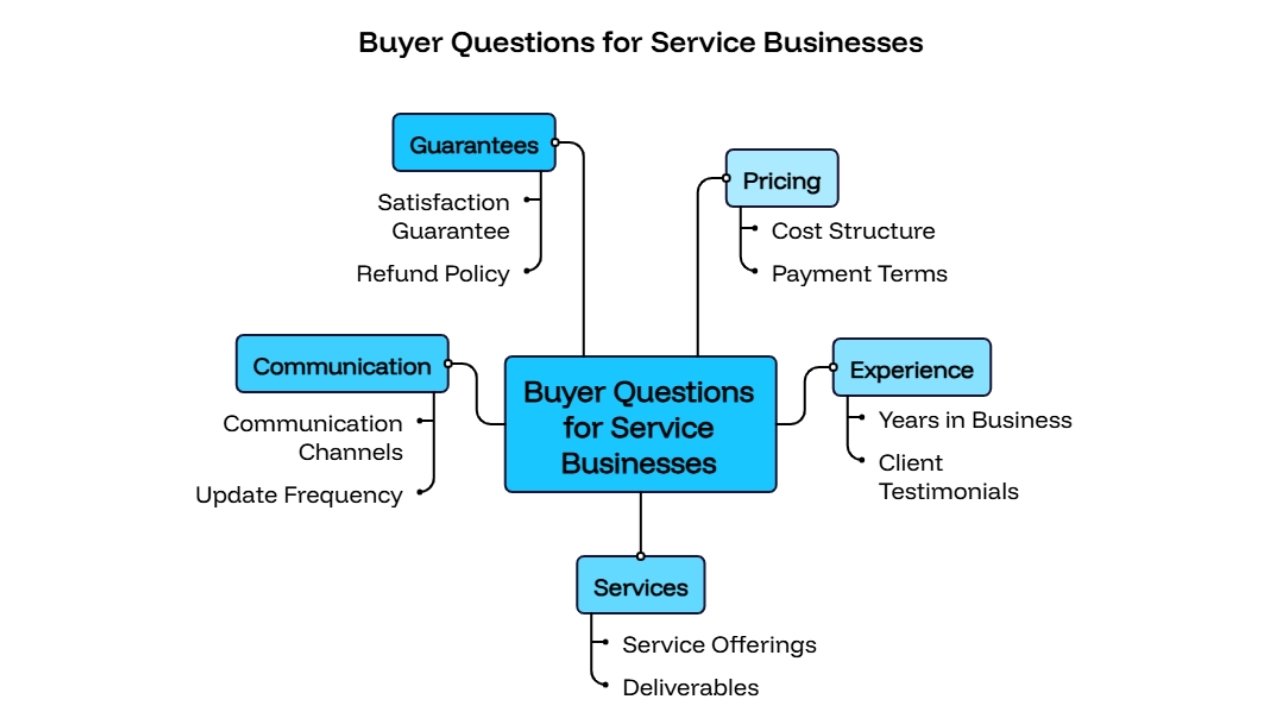
Before you open any AI tool, start with a notebook or a blank document. Write down the actual questions a potential customer might ask before choosing a business like yours. Don’t overthink this — imagine a friend asking you for advice, and write down how they’d phrase it.
A few examples to get you started:
- “Who’s a good [your service] in [your city/area]?”
- “What’s the best [your industry] near [a specific neighborhood]?”
- “I need [specific problem] fixed, who should I call?”
- “Is [your business name] any good?”
- “What’s the difference between [your service] and [a competing service]?”
- “How much should [your service] typically cost?”
Aim for a solid list — somewhere between a handful and a few dozen questions, covering different angles: general recommendations, specific problems, comparisons, and direct questions about your business by name.
Step 2: Ask the Questions Across Multiple AI Tools
Now open up a few different AI tools — ChatGPT, Gemini, Claude, and Perplexity are the main ones worth checking, since each one pulls from slightly different sources and can give different answers.
Go through your list of questions one by one, and for each one, pay attention to:
- Does your business get mentioned at all? Sometimes the answer is simply no, and that’s valuable information on its own.
- Where does your business appear in the answer? Mentioned first, mentioned as an afterthought, or only mentioned when you ask about your business by name directly?
- Who else gets mentioned? Write down every competitor name that comes up repeatedly. These are the businesses you’re effectively competing against in this new space.
- What does the AI say about you (or them)? Sometimes AI tools will summarize what they “know” about a business — its reputation, specialties, or even outdated information. If something inaccurate or outdated comes up about your business, that’s worth noting too.
Keep a simple table: one row per question, columns for each AI tool, and notes on whether you appeared, where, and who else did.
Step 3: Check the Consistency of Your Business Information
While you’re at it, take a step back and check how your business information appears across the web. Search your business name and look at:
- Your Google Business Profile
- Any directory listings (Yelp-style sites, industry-specific directories, local chamber of commerce listings, etc.)
- Your website’s contact page and footer
- Your social media profiles
Check that your business name, address, phone number, website link, hours, and core services match everywhere. It’s surprisingly common to find an old address, a disconnected phone number, or a slightly different business name on one or two listings — and these small inconsistencies can quietly undermine the trust signals AI tools are looking for.
Step 4: Look at Your Reviews With Fresh Eyes
Reviews play a bigger role in AI visibility than most people expect. As part of your audit, take stock of:
- How many platforms have reviews for your business (not just one)
- How recent your most recent reviews are
- Whether you’ve responded to reviews — especially any negative ones
- What themes come up repeatedly in your reviews (these often hint at what AI tools associate with your business)
If your reviews are sparse, outdated, or concentrated on a single platform, that’s a clear and very actionable area to focus on.
Step 5: Audit Your Own Website for Question-Answer Clarity
Go back to the list of customer questions you wrote in Step 1. For each one, ask yourself honestly: does my website actually answer this clearly, in plain language, somewhere a visitor (or an AI tool) could find it?
A lot of business websites are full of general statements — “we provide quality service with years of experience” — without ever directly answering the specific things customers want to know. As you go through your pages, look for:
- FAQ sections that match real questions, not just generic ones
- Service pages that explain what’s included, how the process works, and what to expect
- Pages that have been updated recently, rather than sitting untouched for a long time
- Clear information about your service area, specialties, and what makes your approach different
Wherever you find a gap — a real customer question your site doesn’t clearly answer — that’s a page or section worth creating or improving.
Step 6: Look at Who’s Talking About You (and Your Competitors)
Search for your business name along with terms like “review,” “experience with,” or your industry plus your city, and see what comes up beyond your own website and listings. Are there any articles, forum threads, local news mentions, or community posts that reference you?
Do the same search for the competitors who kept showing up in Step 2. Often, you’ll notice they’ve been featured somewhere you haven’t — a local publication, a podcast, an industry roundup. These third-party mentions are a meaningful part of why AI tools may be recommending them over you, and they point toward realistic opportunities: reaching out to local publications, participating in community events, or contributing to industry discussions where your expertise is genuinely useful.
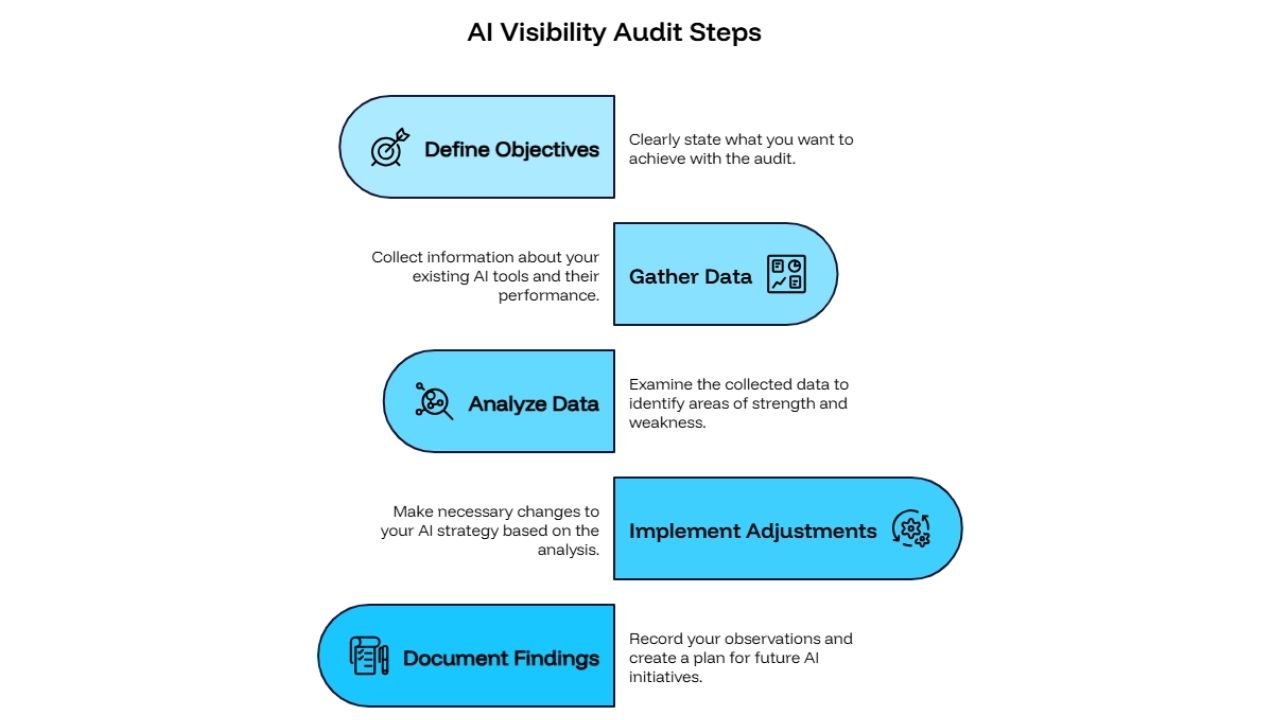
Step 7: Put It All Together Into a Simple Action Plan
By this point, you’ll have a clear picture built from real evidence rather than guesswork:
- Which questions your business shows up for, and which it doesn’t
- Which competitors keep appearing instead of you
- Where your business information is inconsistent across the web
- How strong (or thin) your review presence is
- Which customer questions your website doesn’t clearly answer
- Where your competitors are getting mentioned that you aren’t
From here, prioritize based on what’s both important and realistic. Fixing inconsistent business listings is usually quick and has an outsized impact. Building out a few genuinely useful FAQ or service pages based on real customer questions is something you can tackle steadily over time. Encouraging more reviews and responding to existing ones is an ongoing habit, not a one-time fix. And reaching out for a mention or feature somewhere relevant to your industry is a longer-term project, but often one of the most valuable.
Make It a Habit, Not a One-Time Check
The businesses that do well with AI visibility over time aren’t the ones who did a single audit and stopped. They’re the ones who check back periodically — every few months is plenty for most local businesses — because AI tools update what they know, new competitors get mentioned, and your own efforts start to show up in the answers over time.
Think of this audit the same way you’d think of checking in on your reputation in your local community: not a one-time event, but a regular habit that helps you understand how you’re seen, and gives you a clear, honest starting point for improving it.