There’s a moment most small business owners recognise. When you finish a job or a client meeting, you know you should be following up on leads, posting something on social media, sending a newsletter, updating your Google profile and you just don’t have the time. Or the energy. Or both.
Marketing always feels like it should happen after everything else, which means it often doesn’t happen at all.
This is exactly where AI-driven marketing automation has started to make a real difference for local businesses in Australia. Not in the science-fiction way it gets talked about in tech circles, but in practical, day-to-day ways that free up your time and keep your business visible to the right people in your area.
This article breaks down what that actually looks like: no hype, no promises about going viral overnight, just a realistic look at how local businesses are using automation to generate more consistent leads without burning themselves out trying to do everything manually.
The Gap Between Knowing and Doing
Most local business owners know what good marketing looks like. Post consistently. Follow up with leads quickly. Respond to reviews. Send emails to past customers. Keep your website content current.
The problem isn’t knowledge. It’s capacity.
A plumber finishing a job at 5pm isn’t going to sit down and craft a thoughtful social post about water heater maintenance tips. An accountant in the middle of tax season isn’t going to review their Google Analytics and optimize their service pages.
This gap between knowing what to do and actually doing it consistently is what causes most local marketing to be inconsistent, sporadic, and ultimately ineffective.
AI automation doesn’t replace thinking. But it closes the gap between the thinking and the doing and that’s where local leads start to grow.
What “Marketing Automation” Actually Means for a Local Business
Marketing automation used to mean expensive software, dedicated staff, and complex CRM systems. That world still exists for large businesses, but the landscape has changed significantly.
For a local Australian business in 2026, automation can be as practical as:
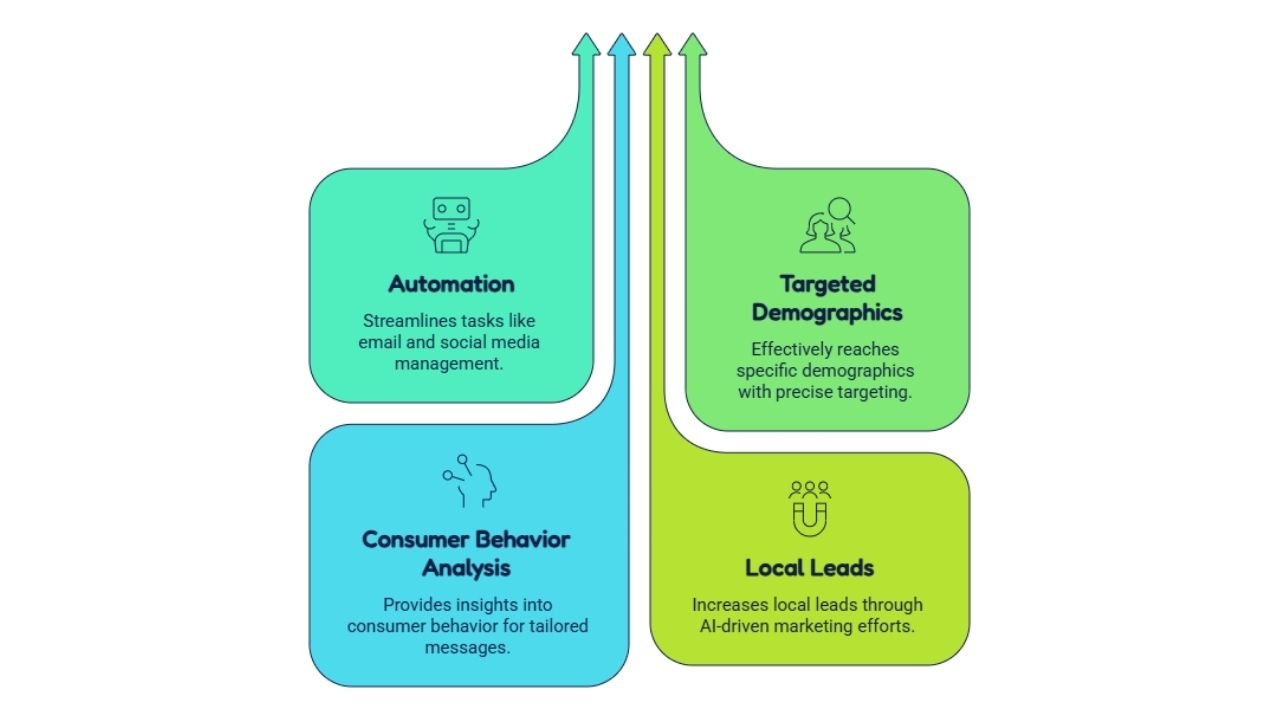
- A system that follows up with every inquiry within minutes, even outside business hours
- Content suggestions based on what your customers are actually asking about online
- Review request sequences that go out automatically after a job is complete
- Email check-ins to past customers at intervals that make sense for your service type
- Social content that gets drafted, scheduled, and posted without you touching it each time
None of these require a marketing department. They require the right setup which takes some upfront investment of time and then they run largely in the background.
Where Automation Has the Biggest Impact on Local Leads
Lead Response Time
This is the single biggest lever for most local businesses, and it’s the one that gets overlooked most often.
Research into lead behaviour consistently shows that the likelihood of converting an inquiry drops dramatically with every hour that passes after first contact. When someone reaches out through your website or Google profile at 8pm, they’re often also contacting two or three competitors at the same time. The business that responds first even with a simple acknowledgment tends to win the job.
AI-driven response systems can handle that first contact automatically. Not with a robotic form response, but with a personalized message that acknowledges what they asked about, gives them useful information, and lets them know when they’ll hear back from a real person.
For a lot of local businesses, this single change of automated fast follow-up makes a noticeable difference in how many inquiries convert into actual booked work.
Content That Keeps You Visible
Showing up consistently in local search isn’t just about your website ranking. It’s about your Google Business Profile being active, your social presence being maintained, and your website being updated with fresh, relevant content.
AI tools can help with all of this. Not by producing content that sounds like it was generated by a machine the kind of flat, generic text that reads the same regardless of what business it’s for but by starting with your specific expertise and customers, and drafting content that you can review and personalise before it goes out.
The goal isn’t to remove you from the process. It’s to make the process take fifteen minutes instead of two hours.
Follow-Up Sequences for Past Customers
One of the most underused sources of local leads is your existing customer base. People who’ve used your service before are far more likely to use you again — if they remember you exist when they need you next.
Automated follow-up sequences can handle this quietly in the background. A message a few months after a job asking if everything’s still working well. A reminder before a service interval is due. A check-in at the start of a new season with genuinely useful information about something relevant to them.
These aren’t sales pitches. They’re touchpoints that keep your business in mind without being pushy — and they work because they feel like care, not marketing.
Review Generation on Autopilot
Consistent reviews are one of the most important factors in local SEO and in the trust decisions of potential customers. But most businesses only get reviews when customers feel strongly enough to leave them unprompted which usually means when something went wrong.
Automated review request sequences change this. After a job is completed, a message goes out to the customer timed well, worded naturally, making it easy for them to share their experience. Over months, this builds a steady, authentic stream of reviews without you having to remember to ask.
What Good Automation Looks Like (and What to Avoid)
What Works
The automation that works well for local businesses has a few things in common. It’s timely; it reaches people at the right moment, not randomly. It’s relevant because it references something specific to that customer or their situation. And it sounds like it came from a real person, because it was crafted by one, even if it’s being sent automatically.
The best-performing local marketing automation feels invisible to the customer. They don’t experience it as automation. They experience it as a business that’s responsive, attentive, and easy to deal with.
What to Avoid
The automation that backfires tends to be the opposite: generic, frequent, and obviously templated. If you’re sending the same message to every customer regardless of what they bought, what suburb they’re in, or what their situation is, the automation isn’t helping it’s just adding noise to their inbox.
Similarly, using AI to produce large volumes of low-quality content generic blog posts, suburban pages that say nothing useful, social posts that are just filler doesn’t work in 2026. Google’s systems have gotten much better at identifying content that exists to fill space rather than to genuinely help someone. More content isn’t better. Better content is better.
Practical Starting Points
If you’re a local Australian business owner looking to use automation to increase leads, here’s a practical sequence to consider.
Step one: Sort your lead response. This is the highest-value thing to fix first. Whether you use a tool built into your website, a CRM with automation, or a simpler messaging system, make sure every inquiry gets acknowledged quickly every time.
Step two: Set up a review request sequence. After every completed job or service, a follow-up should go out. Keep it simple, keep it genuine, and make it easy for the customer to click through and leave feedback.
Step three: Create a basic content calendar with AI assistance. Use AI tools to help you identify what questions your customers are asking, draft content ideas, and prepare material you can review and post on a consistent schedule. Consistency matters more than volume.
Step four: Build a past-customer follow-up sequence. Go through your existing customer list and set up a simple touchpoint series. Not sales content genuinely useful information or a simple check-in. These reminders bring back repeat business without any active selling.
Step five: Keep reviewing and improving. Automation isn’t something you set up once and forget. The sequences that work in month one might need adjusting in month six. Set aside regular time even once a quarter to review what’s performing and what needs updating.
The Trust Element
One thing worth addressing directly: some business owners worry that automation will make their business feel less personal. It’s a reasonable concern.
The answer is that automation and authenticity aren’t opposites. The businesses that do this well use automation to handle the logistics, the timing, the sending, the scheduling while keeping the actual content genuinely human. Your voice, your expertise, and your care for the customer.
When a customer gets a follow-up message that sounds like it could only have come from your specific business, not from any generic service business the fact that it was sent automatically is invisible to them. All they experience is a business that treats them well.
That’s what builds local trust. And trust is what turns occasional customers into regulars, and regulars into the people who tell their neighbours about you.
The Long Game
The businesses in Australia that are generating consistent local leads in 2026 aren’t necessarily the ones spending the most on ads or the ones with the biggest social following. Many of them are smaller operations that build reliable systems for follow-up, for staying visible, and for taking care of past customers.
AI automation makes those systems achievable for businesses that don’t have a marketing team. It doesn’t replace judgment, expertise, or the quality of the actual work you do. But it removes the barrier of time and capacity that stops most local businesses from doing their marketing consistently.
Set up the systems. Keep them human. Give them time to compound.
That’s the approach that works.
Ready to explore what marketing automation could look like for your local business? Visit getairanks.com to learn more.