If you run a local business in Australia whether it’s a trade service in Brisbane, a dental clinic in Melbourne, or a café in Surry Hills you’ve probably noticed something different about the way customers are finding businesses online.
They’re not just Googling anymore. They’re asking.
“The best electrician near me opens on Saturday.” “Which physiotherapist in Parramatta accepts Medicare?” “Affordable accountant for small business in Adelaide.”
These aren’t traditional search queries. They’re full sentences. Conversational. And behind them is a new kind of search engine, one powered by AI.
This shift is one of the biggest changes to hit local SEO in years. And most Australian business owners haven’t caught up yet.
What’s Actually Changed in 2026
Google didn’t just add a chatbot. It rewired how it reads, understands, and ranks content especially for local intent.
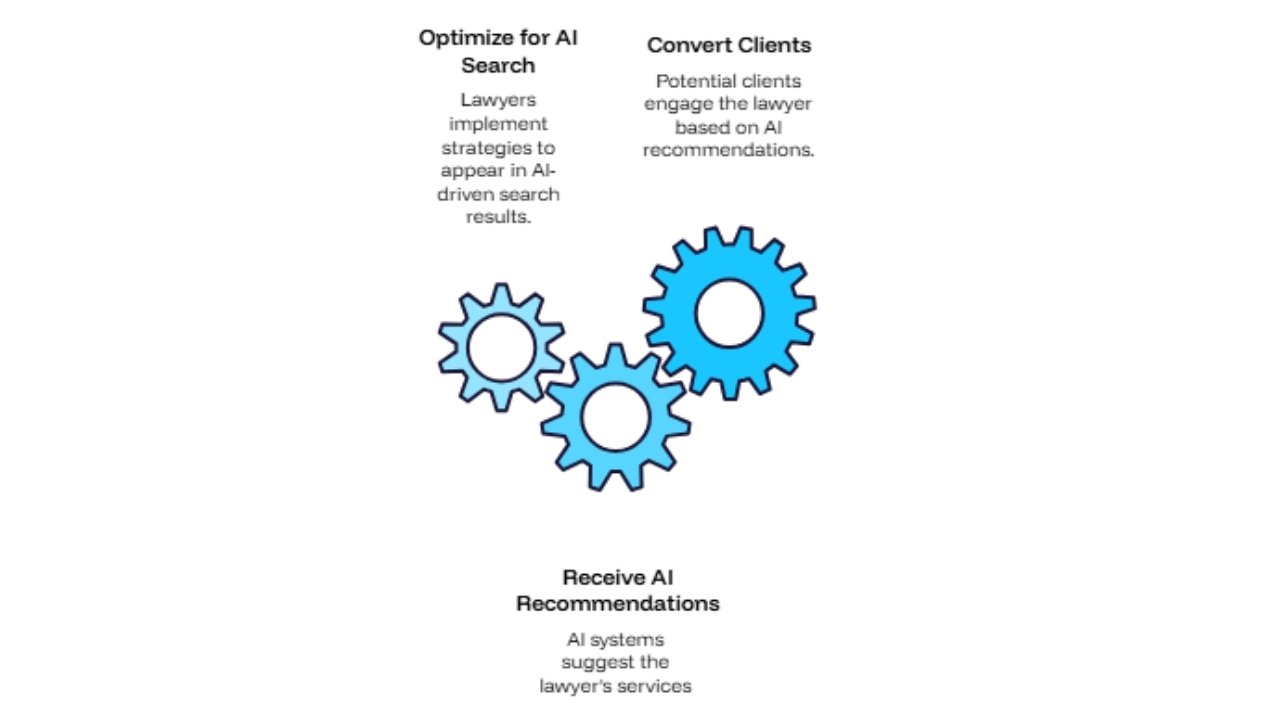
AI Overviews (what used to be called SGE) now sit at the top of search results for many queries. When someone searches for a local service, Google’s AI summarises an answer directly on the results page, pulling from businesses it trusts most. It cites sources, it mentions business names, and it links to specific pages.
If your business isn’t one of the ones being cited, you’re invisible even if you’re ranking on page one.
This is the core problem Australian local businesses are running into right now.
The old game was: rank in the top three. The new game is: become the source of Google’s AI quotes.
Why AI Search Behaves Differently for Local Queries
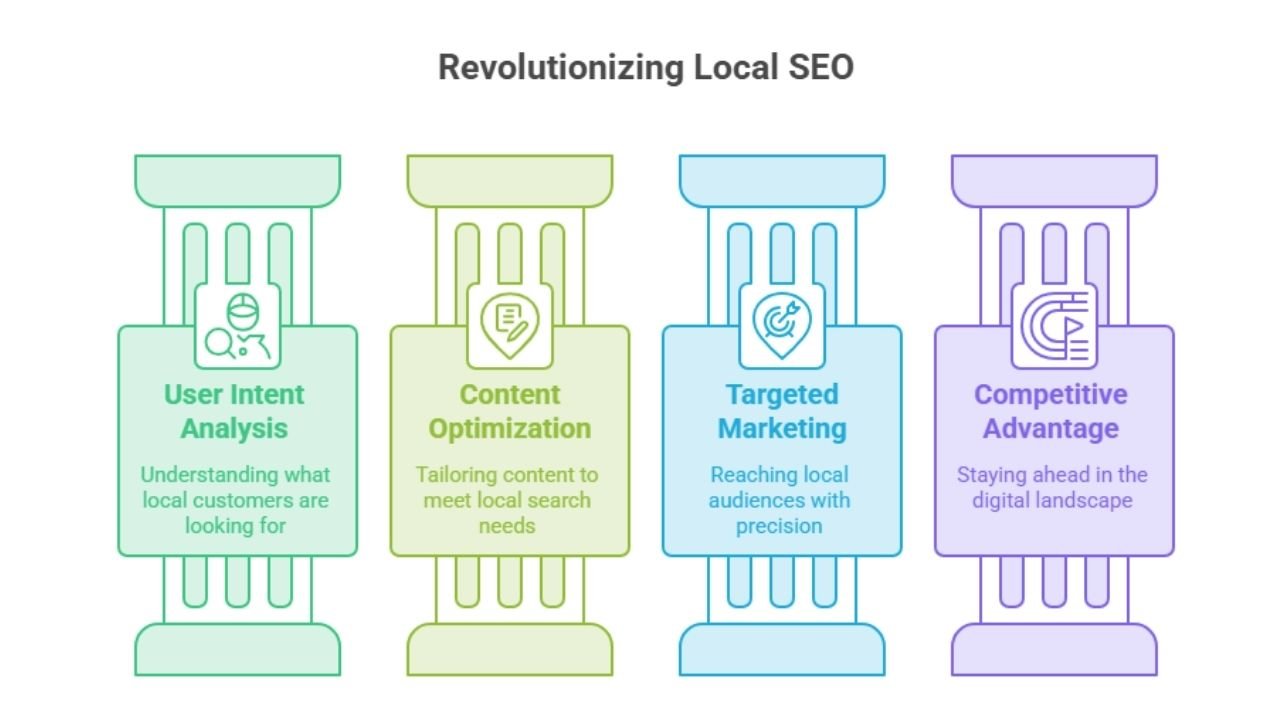
Traditional search matched keywords. AI search matches intent.
When someone types “best plumber in Geelong,” a keyword-based system looks for pages with those exact words. An AI-powered system tries to understand what the person actually needs, urgency, location, trust signals, service type and then finds the business that best fits all of those factors together.
This matters because it means your website content has to do more than just include the right keywords. It has to communicate clearly, answer real questions, and demonstrate that your business is the right choice for this specific type of customer in this specific area.
For Australian businesses, that means a few things are now non-negotiable.
The Signals That Actually Matter Now
1. Your Google Business Profile Is More Important Than Ever
This isn’t new advice, but the weight it carries in 2026 has increased significantly. AI systems pull from your Google Business Profile (GBP) constantly your category, your services, your Q&A section, your reviews, your photos.
Businesses that treat their GBP like a yellow pages listing are getting left behind. The ones winning in AI search have profiles that look like mini websites. They’ve filled out every field. They post updates, respond to every review, good and bad, and add products and services with actual descriptions, not just names.
If your profile still has the same three photos from when you first set it up two years ago, that’s a problem.
2. Local Content That Matches How People Actually Ask Questions
One of the clearest patterns in 2026 is that AI search favours content that mirrors how people speak when they’re looking for local services.
People don’t search “HVAC installation Sydney.” They search “how do I know if my ducted AC needs replacing?” or “who can install a split system in my apartment in Newtown?”
The businesses getting picked up by AI Overviews tend to have content that answers these kinds of conversational questions: blog posts, FAQ pages, service pages written in plain language rather than corporate speak.
This doesn’t mean you need to write hundreds of articles. It means the content you do have needs to actually address what your customers are worried about, confused about, or looking for help with.
3. Reviews That Go Beyond Star Ratings
Everyone knows reviews matter. But in 2026, the content of reviews matters more than the count.
AI systems read reviews for signals. When customers mention specific services (“they fixed my roof leak the same day”), specific locations (“their team came out to our Manly property”), and specific outcomes (“we finally got our tax sorted before the deadline”), those reviews become ranking signals.
This changes how you should think about asking for reviews. Rather than just asking for five stars, guide happy customers toward leaving specific, detailed feedback. Something like: “If you’re happy with our work, it really helps us if you can mention what we did and where we helped you.”
4. Entity Authority Making Google Know You’re Real
In 2026, Google’s AI doesn’t just rank pages. It ranks entities — real-world things it has built a model of. Businesses, people, places.
For a local Australian business, building entity authority means making sure Google has consistent, connected information about you from multiple sources. Your NAP (Name, Address, Phone) needs to match across your website, your GBP, your social profiles, and any directories you’re listed in.
It also means being mentioned in local publications, community sites, and industry directories — not just for the backlink, but because each mention reinforces to Google’s AI that you are a real, active, trusted business in a specific area.
What’s Not Working Anymore
Thin Service Pages
A page that just says “We offer plumbing services in Sydney” with a paragraph of text and a contact form isn’t going to cut it. AI search needs depth.
1. What kind of plumbing?
2. What areas exactly?
3. What problems do you solve?
4. What should a customer expect when they call?
Thin pages signal low expertise to AI systems. If you’ve got twenty suburb pages that all say basically the same thing with the suburb name swapped in, those pages are likely hurting you more than helping.
Keyword Stuffing in Modern Clothing
Some businesses have updated their keyword strategy to include more long-tail phrases, which is good. But then they’ve crammed those phrases into content that still reads like it was written for search bots, not humans.
AI systems in 2026 are remarkably good at detecting content that exists only to rank rather than to genuinely help a reader. It’s not just about the words it’s about whether the content structure, the depth, and the intent behind it matches what a real customer actually needs.
Ignoring the User Experience Signals
Core Web Vitals and page experience signals have been around for years, but they feed directly into how AI-powered search evaluates your site. A slow-loading page, a website that’s hard to navigate on mobile, or content that’s buried under popups all of these tell Google’s systems that your site isn’t actually serving users well.
For Australian businesses specifically, mobile performance matters enormously. A large portion of local searches happen on phones, often on the go. If your website takes four seconds to load on a mobile connection, you’ve already lost the customer before they’ve read a word.
A Realistic 2026 Local SEO Strategy for Australian Businesses
You don’t need to overhaul everything at once. Here’s where to focus your energy.
Start with your Google Business Profile. Go through every section. Fill out every field. Add photos of your actual team and work. Set up services properly. Enable the Q&A section and pre-populate it with real questions your customers ask.
Audit your existing content. Look at your service pages honestly. Would a customer reading them actually learn something useful? Would they feel like you understand their problem? If not, rewrite them not to add keywords, but to genuinely explain what you do and who you help.
Create suburb and region-specific content that earns it. Instead of a template page for every suburb, create fewer pages but make them genuinely useful. What’s different about doing your type of work in that area? What local knowledge do you bring? What do customers in that area need most?
Build a review generation habit. After every job or completed service, follow up. Make it easy for happy customers to leave a review. And make the task specific tell them what helps you most.
Fix your technical foundation. Check your site speed on mobile. Make sure your NAP is consistent everywhere. Fix any broken links. These aren’t glamorous tasks, but they’re the floor that everything else is built on.
Earn local citations and mentions. Get listed in relevant Australian directories. Reach out to local publications or community sites when you have something genuinely newsworthy. Participate in your local business community online.
The Patience Piece
It’s worth saying directly: local SEO in 2026, even with the best strategy, takes time. AI search systems learn over months. Trust signals accumulate gradually. Content earns authority through consistent effort, not overnight.
The businesses that are winning in Australian local search right now aren’t doing anything miraculous. They built good digital foundations, created genuinely useful content, maintained their Google presence consistently, and kept earning trust in their communities over time.
That’s still the strategy. AI search hasn’t changed the goal, it’s just raised the standard for what it takes to get there.
Final Thought
The Australian businesses that will thrive in AI search over the next few years aren’t the ones chasing every new tactic. They’re the ones who understand what AI search is actually trying to do to find the best, most trustworthy answer for a person with a specific need in a specific place.
If you build your local SEO strategy around genuinely deserving that recommendation, the rest tends to follow.
Want to see how your business is currently positioned for AI search? Visit getairanks.com to get started.