Search has changed more in the past two years than it did in the decade before that. The introduction of AI-generated answers into mainstream search engines, the rise of conversational search, and the way people now ask questions of their devices rather than just typing keywords in AI Search, all of this has reshuffled what it takes for a local business to be found.
This guide is a complete look at how local businesses should be approaching search engine optimization in 2026, with a focus on what has changed, what still works, and what you actually need to do to stay visible.
Understanding the New Search Landscape
Let us start with the most important thing to understand: people have not stopped searching, they have changed how they search in AI Search.
When someone types “best electrician Geelong” into Google, they are doing traditional search. When someone says to their phone “Hey, who is a reliable electrician near me available this week?” or asks a conversational AI “Which electricians in Geelong have good reviews for residential work?”, they are doing something different. They are expecting a curated, reasoned answer, not a list of ten links.
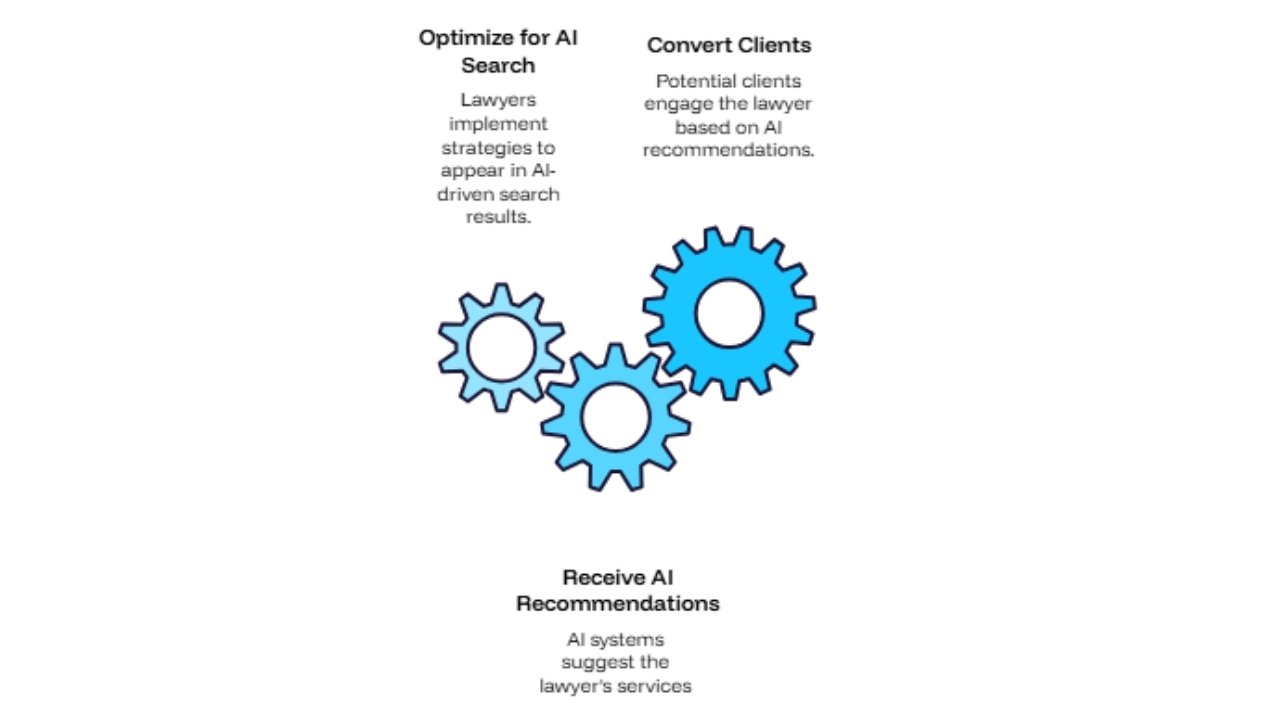
Google’s AI Overviews now appear at the top of many searches and directly recommend specific businesses or types of businesses in response to these queries. Perplexity, ChatGPT with browser capabilities, and other AI tools are being used by Australians, particularly younger demographics, to get recommendations before they even visit a business’s website.
For a local business owner, this creates a new challenge and a new opportunity at the same time. The challenge is that if you are not set up to be referenced by these systems, you will not appear in the answers they generate. The opportunity is that most of your competitors have not caught up yet.
The Foundation: What Has Not Changed
Before getting into what is new, it is worth acknowledging what remains true.
Search engines still want to connect people with the most relevant, trustworthy answer to their query. That principle has not changed. What has changed is how they define “relevant” and “trustworthy,” and how they surface that answer.
The fundamentals of good SEO still apply. Having a well-structured website, creating content that genuinely serves your audience, maintaining an accurate and complete Google Business Profile, earning legitimate mentions and links from credible sources, and building a strong review profile, all of this remains essential.
What has changed is the weight these signals carry and the way they interact with each other in a world where AI is processing them. A website that would have ranked decently in 2022 with thin content and a reasonable number of backlinks may not perform as well in 2026, because AI systems are now much better at evaluating genuine helpfulness versus superficial optimization.
The EEAT Framework and Why It Matters More in 2026
EEAT stands for Experience, Expertise, Authoritativeness, and Trustworthiness. Google has used this framework as part of its quality evaluation for years, but in 2026 it is the dominant lens through which your content and your entire online presence is assessed.
Experience refers to demonstrated, first-hand knowledge. A blog post written by someone who has actually done the work or lived through the situation it describes reads differently, and is evaluated differently, than content assembled from other sources. For local businesses, this means your content should reflect real experience in your trade, your market, and your community.
Expertise is about depth of knowledge in your field. This does not mean academic credentials, although those help in certain industries. It means that your content, your service descriptions, and the way you talk about your work on your website and profile demonstrates that you genuinely know what you are doing.
Authoritativeness comes from how others perceive and reference you. When local news outlets mention your business, when industry associations list you, when other credible websites link to you, and when customers leave detailed reviews that describe your expertise, you are building authority that search engines recognise.
Trustworthiness is about accuracy, consistency, and reliability. Your contact information matches everywhere, reviews reflect genuine customer experiences, website does not make promises your business cannot keep, and policies are transparent.
For AI search in particular, trustworthiness has taken on extra weight because AI systems are trying to identify businesses they can confidently recommend without risk of recommending something harmful or misleading.
How AI Systems Process Local Business Information
Understanding what information these systems draw on helps you present your business in the right way in AI Search.
Your website content is primary. AI systems crawl and read websites, and they are increasingly good at understanding the meaning and intent behind content, not just matching keywords. Pages that comprehensively answer real questions perform better than pages designed primarily to rank for specific terms.
Structured data gives AI systems a machine-readable summary of your business information. Think of it as a fact sheet embedded in your website code that tells search engines exactly who you are, what you offer, where you are, when you operate, and what makes you qualified to provide your service.
Your Google Business Profile is still treated as a primary source of local business information by Google’s AI systems. The completeness and quality of your profile directly influences how and when you appear in AI-generated local answers.
Third-party mentions and reviews are used as corroboration. When multiple independent sources describe your business in consistent, positive terms, it confirms to AI systems that the information on your own website is reliable.
Your historical consistency matters. A business that has had the same address, phone number, and service description across the web for several years is treated as more established and trustworthy than one where basic information changes frequently or differs across sources.
Building Content That Works for AI and Humans
This is where a lot of businesses get confused. They either write for humans in a way that AI systems cannot easily process, or they write for algorithms in a way that feels robotic and drives people away. The goal is content that does both well simultaneously, and honestly, these are more aligned than they seem.
Write to answer questions, not to target keywords
A physiotherapy clinic that creates a page called “What to Expect After Your First Appointment” is answering a real question that real patients search for. That page will be more useful to a potential patient reading it and more likely to be surfaced by an AI system looking for a trustworthy answer to that query than a page called “Physiotherapy Services Melbourne.”
Go deep on topics your customers care about
Surface-level content that covers a topic in three paragraphs is no longer competitive. A comprehensive, genuinely informative resource that addresses a topic from multiple angles, anticipates follow-up questions, and provides actionable guidance is what earns both readership and search visibility.
Localise meaningfully
This goes beyond mentioning your suburb. It means creating content that reflects genuine knowledge of your local area, your customers, and the local factors that shape your industry. A building inspector in Adelaide who discusses soil conditions specific to certain suburbs shows a level of local expertise that generic content cannot match. Similarly, a financial planner in Sydney who addresses property market concerns in specific neighbourhoods demonstrates practical, location-based insight. This kind of locally grounded content builds relevance and trust in ways broad, non-specific writing cannot.
Update your content regularly
AI systems look at freshness signals. A page that was created and never updated signals that the information may be stale. Revisiting your key service pages annually and refreshing them with current information keeps them competitive.
Voice Search and Conversational Queries
Voice search in 2026 is no longer a niche behaviour. A significant portion of local searches, particularly on mobile devices, are spoken rather than typed. This changes the nature of the search query in a way that should influence how you create content.
Typed queries are short and fragmented. “Plumber Townsville emergency” is a typical typed search. Spoken queries are longer and conversational. “Find me an emergency plumber in Townsville who can come today” is the voice equivalent.
This matters because your content needs to address these longer, more conversational queries. FAQ sections, conversational headings, and content written in natural language that reflects how people actually speak tend to perform better in voice and AI search environments.
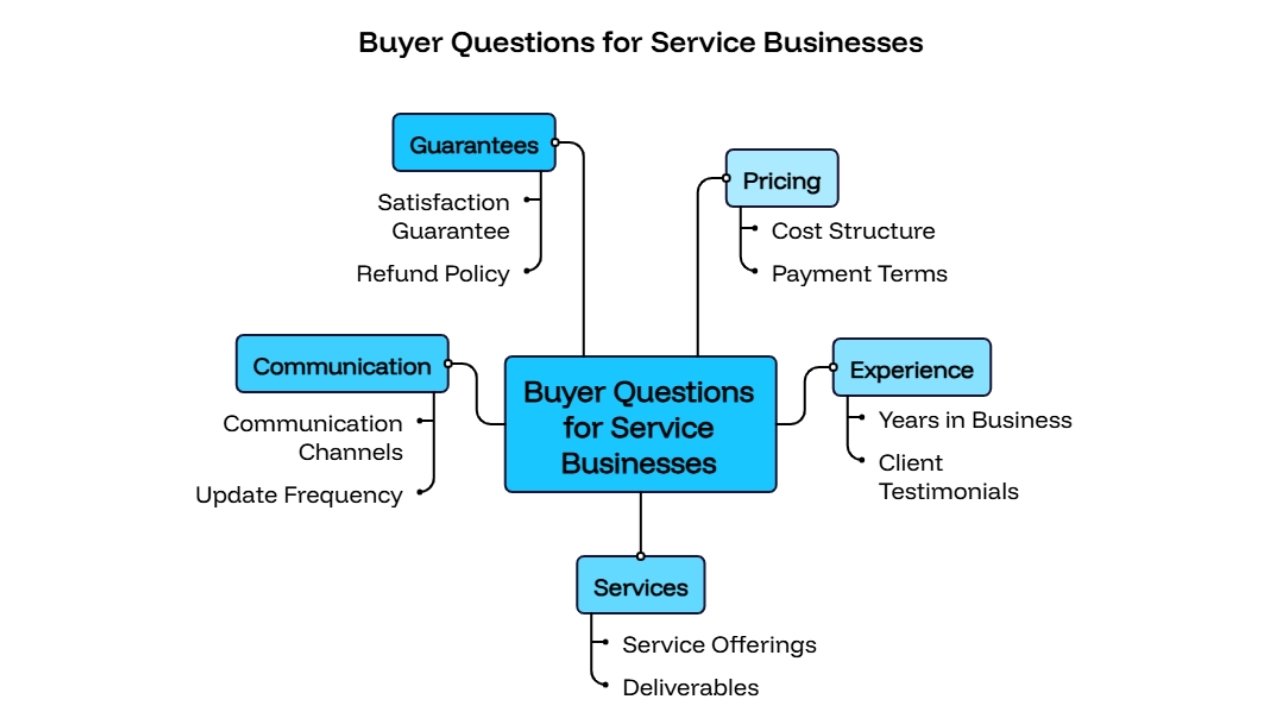
Think about the questions your customers ask over the phone when they first call you. These are often the exact queries they are typing or speaking into their devices before they find your number. Build content around these questions.
Local Link Building in 2026: What Works and What Does Not
Link building remains part of the local SEO equation, but the approach has matured considerably.
What works now:
Earning mentions and links from genuinely relevant local sources. If you sponsor a local sporting club, contribute to a community event, appear in a local newspaper article, or are listed on your industry association’s member directory, these references carry real weight. They are legitimate signals that your business is embedded in its community.
Building relationships with complementary local businesses. A wedding photographer who is recommended by a wedding venue, or a structural engineer who is referred by an architect, creates the kind of cross-linking that looks natural because it is natural.
Creating resources that local websites genuinely want to link to. A guide to local regulations relevant to your industry, a neighbourhood-specific service resource, or a useful tool for local customers can earn links organically over time.
What does not work in 2026:
Buying links from link farms or general directory sites that have no organic traffic or local relevance. These schemes have become progressively easier for Google’s systems to identify and penalise.
Guest posting campaigns designed purely for links. Thin articles placed on irrelevant websites with embedded links to your local business pages have minimal value and carry meaningful risk.
Reciprocal link arrangements that are clearly manufactured. Search systems have become sophisticated enough to identify link patterns that exist only for SEO purposes rather than genuine referral value.
Google Search Console: Your Window Into What Is Working
If you have a business website and you are not using Google Search Console, you are flying blind. This free tool from Google shows you exactly which search queries are leading people to your site, which pages are performing, what your average position is for different terms, and whether there are any technical issues affecting your visibility.
In 2026, Search Console will also become a useful indicator of how your site is being treated by Google’s AI systems. Changes in impressions and click-through rates for specific query types can reveal whether your content is being included or excluded from AI-generated answers.
Key things to track in Search Console:
The queries that are generating impressions but low clicks often represent opportunities. If people are seeing your site in results but not clicking, either your title and description are not compelling, or you are appearing for queries that your content does not fully match.
Pages that have lost traffic over time despite maintaining their position often indicate that AI Overviews or featured snippets are now satisfying the query without requiring a click. Understanding this helps you decide whether to optimize for position zero or focus on driving traffic from different query types.
New queries that appear organically as you add content tell you what your audience is actually interested in, beyond what you originally planned.
Technical SEO for Local Businesses: The Essentials
You do not need to be a developer to ensure the technical basics of your website support your local SEO. But you do need to understand what they are.
Page speed and mobile performance. Most local searches happen on mobile devices, and Google uses mobile page speed as a ranking factor. A website that loads in under three seconds on a phone provides a meaningfully better experience than one that takes seven, and this difference is reflected in rankings.
HTTPS security. Every business website should be served over HTTPS. It is a baseline trust signal and a confirmed ranking factor. If your website still begins with HTTP rather than HTTPS, this needs to be addressed.
Core Web Vitals. These are Google’s metrics for user experience on the web. They measure things like how quickly the main content of a page loads, how quickly a page responds to user interaction, and how stable the page layout is as it loads. Meeting the recommended thresholds for these metrics is now a meaningful ranking factor.
Crawlability and indexation. Your website needs to be structured so that search engines can find and index all of your important pages. Basic issues like pages being accidentally blocked from crawling, redirect chains, or broken links can all suppress your visibility.
Schema markup. As discussed earlier, structured data is the technical layer that helps search engines and AI systems understand your business information accurately. For local businesses, LocalBusiness schema is the priority.
The Local Authority Flywheel
Here is a concept worth understanding: local search visibility tends to compound over time when you approach it correctly. We call this the local authority flywheel.
When your business appears consistently in local search results, more people visit your website and your profile. More people visit your premises or call you. More people leave reviews. Those reviews improve your profile. Better reviews attract more visibility. More visibility generates more content ideas as you understand what your customers are asking. Better content earns more mentions. Those mentions build more authority. More authority improves your rankings.
This flywheel moves slowly at first. Businesses that expect immediate results from local SEO often give up before they see momentum. But once it is moving, it becomes increasingly difficult for competitors to disrupt without making a sustained, equivalent investment.
The businesses that are winning in Australian local search in 2026 started this process consistently twelve to twenty-four months ago. The best time to start is now, because the businesses starting today will be in the strongest position a year from now.
A Framework for Getting Started
If you want to structure your approach to local SEO in 2026, here is a practical framework:
Foundation Ensure your Google Business Profile is complete, accurate, and actively maintained. Ensure your website is technically sound, mobile-friendly, and secure. Ensure your business information is consistent across all directories and citations.
Content Develop a content plan that answers the real questions your customers are asking. Prioritise depth and local relevance over volume. Update existing pages before creating new ones.
Authority Identify legitimate opportunities to earn local mentions and links. Engage with community, industry, and complementary business relationships. Build a consistent review generation process into your customer journey.
Measurement Use Google Search Console to track what is working. Review your local pack appearance, query performance, and website traffic monthly. Adjust based on what the data shows.
Iteration SEO in 2026 is not a campaign with a start and end date. It is an ongoing practice. Businesses that treat it as a continuous commitment consistently outperform those that treat it as a one-time project.
Final Word
The local businesses that thrive in AI-era search are not the ones doing the most complex things. They are the ones doing the foundational things most consistently and most genuinely.
Being truly helpful online, maintaining an accurate and active presence, earning real trust from real customers, and building content that reflects genuine local knowledge in AI Search these are not shortcuts or hacks. They are the actual signals that AI systems are trained to recognise as quality.
That is both the challenge and the opportunity for Australian local businesses in 2026.
getairanks.com supports local businesses in building lasting search visibility. Explore our guides and resources to take the next step.